The University of Michigan's latest study on the binary star system 70 Ophiuchi AB rules out large planets but leaves room for rocky alternatives.
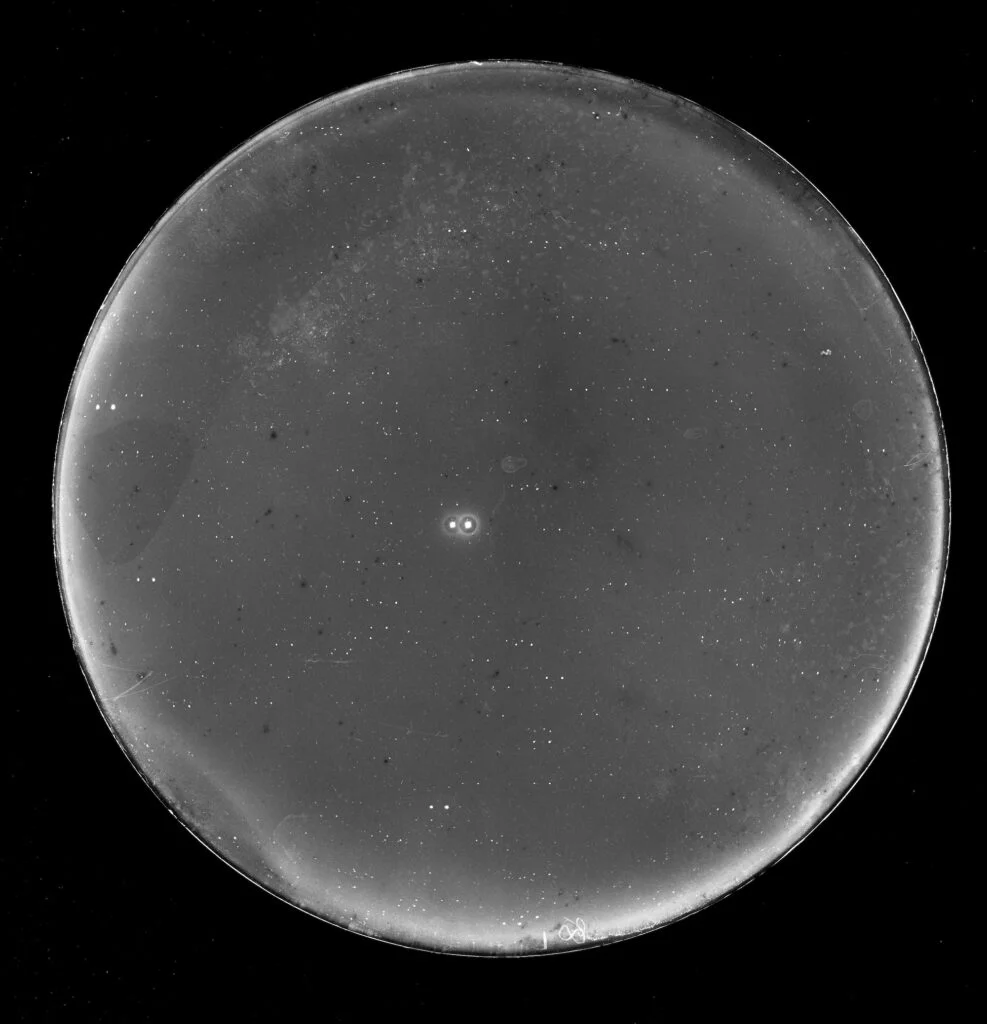
New insights from researchers at the University of Michigan are paving the way for the exploration of rocky exoplanets, particularly in the binary star system known as 70 Ophiuchi AB—or 70 Oph AB. This latest investigation represents a significant leap in the search for giant planets within this system, yet it ultimately came up short in finding any massive companions. The disappointment is palpable, especially considering the historical significance and ongoing intrigue surrounding this celestial system.
Discovery and Historical Context
70 Oph AB isn't a newcomer to the catalog of exoplanetary candidates. In fact, it has a storied legacy that dates back to 1855. Back then, astronomer William Jacob first speculated that this system might harbor a planet, naming it the earliest claimed candidate for exoplanet status. Yet, over the years, Jacob’s initial claims have been contested as our understanding and observational capabilities have matured. Even so, the allure of confirming at least one planetary body in this relatively close binary system—approximately 16 light-years from Earth—remains a tantalizing objective for astronomers.
Unlike many other stars, binary systems like 70 Oph AB are particularly interesting for astronomers. Their gravitational dynamics and the interplay between two stars can influence the formation and evolution of planetary systems, sometimes creating unique conditions that could allow for the development of life. This context makes the recent findings all the more significant.
Latest Research Insights
During this detailed study, scientists set record sensitivity when examining 70 Oph AB, but their findings led to a noteworthy conclusion: planets the size of Jupiter or larger have not been found. Instead, they effectively ruled out such massive planets, which, while disappointing, provides important constraints for future research endeavors. Researchers employed cutting-edge observational techniques to achieve exceptional precision, a necessary approach when studying systems that have historically vexed scientists.
The study, published in The Astrophysical Journal, includes some of the most accurate orbital data of the stars composing 70 Oph AB, significantly enhancing our understanding of their gravitational dynamics. This collective effort involved a multitude of institutions, including NASA’s Jet Propulsion Laboratory, which worked to synthesize a century's worth of data. They meticulously analyzed historical records alongside modern observations to clarify earlier ambiguities concerning stellar motions that could have been misconstrued as planetary influences. The results are striking: researchers determined that no Jupiter-mass planets exist within five astronomical units of 70 Oph A or half an astronomical unit of 70 Oph B. In clearer terms, this means that if massive planets were ever present in this system, they’re no longer. This finding necessitates reevaluation of models that predict planet formation in similar binary systems.
Searching for Rocky Planets
What’s intriguing is that this research also opens the door for the possibility of smaller planets, specifically those the size of Saturn or even smaller. Such planets might reside in the system's habitable zone—the region where conditions are just right for liquid water to exist. The search for smaller bodies is not merely a consolation prize; it introduces exciting prospects for future exploration. The potential for rocky planets in this zone aligns with the larger astronomical search for life beyond Earth.
A central takeaway from the study is reflected in the sentiments of Yiting Li, a postdoctoral researcher in U-M’s Department of Astronomy. He expressed a blend of excitement and disappointment regarding the findings: “We’re uncovering that there isn’t a Jupiter-sized planet, but we’re also ushering in the latest chapter on this historic system,” Li stated. His words reflect the dual nature of scientific exploration—where each negative finding still serves as a stepping stone toward deeper understanding.
Future Missions and Strategic Implications
With the advent of this study, researchers also emphasize the strategic implications for future missions aimed at investigating binary star systems. Michael Meyer, a senior co-author and chair of the U-M astronomy department, remarked that “the new limit enables us to design optimum search strategies in the future.” A forthcoming mission, known as SHERA, is poised to focus on multiple binary systems, with 70 Oph AB identified as a priority target. Here's the thing: every piece of data gathered is crucial for fine-tuning future explorations and search methodologies elsewhere.
(And this is the part most people overlook) The absence of significant discoveries regarding massive planets does not diminish the value of this work. Instead, it serves to refine the parameters for identifying smaller, possibly habitable worlds. As Li aptly put it, “The study sets an upper limit, not a ban, on planets.” This statement underscores a persistent optimism: while the odds for finding giants like Jupiter might have dwindled, the cosmos likely hides smaller, rocky planets ready to be unearthed.
The Broader Implications
What this means for you, particularly if you're working in this space, is that there's still a vast expanse of uncertainty regarding the composition of planetary systems in binary configurations. The complexities inherent in studying such systems challenge astrophysicists to reassess not just their methods, but also their models. As astronomy marches on, so too does the hope that one day we’ll find evidence of other worlds in binary systems that might just host life.
With the exploration of rocky exoplanets becoming a priority, researchers are gearing up for a new chapter in the quest for understanding our universe. The intersection of gravitational dynamics and habitability presents a wealth of questions, driving ongoing investigation. The exploration of 70 Oph AB may have dashed hopes for giant planets, but it also fuels vital discussions about the search for smaller worlds and the future of exoplanet studies. The universe has plenty more secrets to reveal, and scientists are poised to uncover them.


Discussion
Sign in to join the discussion.