Olayami Dabls brings his vibrant artistry to Ann Arbor through a new residency and gallery exhibit, offering insights into his storied career.
Detroit's Artistic Influence Moves to Ann Arbor
Olayami Dabls, a pivotal figure in the Detroit art scene, is currently making headlines with his residency at the University of Michigan. Known for his significant public installations and his ability to weave enriching narratives through art, Dabls recently wrapped up a remarkable 45-year career retrospective at the Museum of Contemporary Art Detroit. This exhibition shone a spotlight on his extensive contributions to visual arts, reaffirming his status as a key influencer in the regional cultural fabric.
Exhibition Details and Significance
This fall, the University of Michigan Institute for the Humanities Gallery is showcasing "Grand Vision," an exhibition not only honoring Dabls' artistic oeuvre but also delving into his personal collection. Featuring a diverse array of his paintings alongside African trade beads and N’kisi figures, the exhibition offers a rich tapestry of Dabls’ personal and cultural history. Attendees can expect to experience an intimate look at how his roots and influences have shaped his work—an aspect that often gets sidelined in contemporary art discussions.
The interplay of personal narrative and artistic expression is significant here. These pieces don’t just serve as aesthetic objects; they are dialogues grounded in Dabls' experiences and heritage, enriching the viewer’s understanding of African cultural narratives within a contemporary context. For art lovers and cultural historians alike, this is more significant than it looks. It’s a reminder that art is not merely isolated expression but a reflection of life, community, and history.
A Featured Outdoor Installation
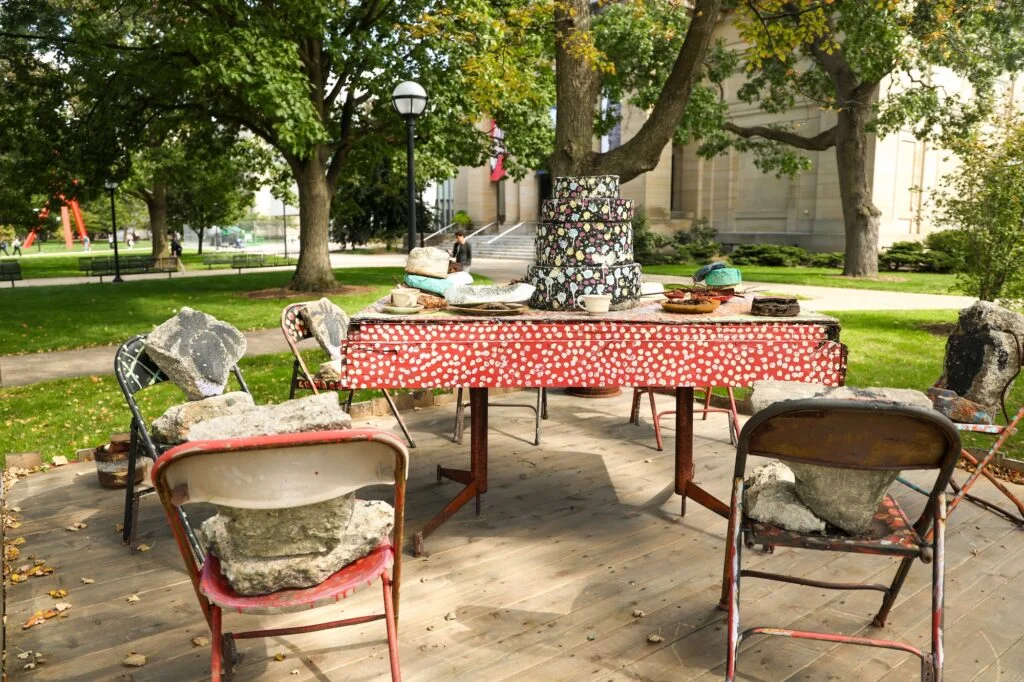
As part of his residency, Dabls has placed his acclaimed outdoor installation, “Iron Teaching Rocks Table Manners,” at a prominent spot on the U-M campus, near the University of Michigan Museum of Art (UMMA). This sculpture is far more than just a visually striking piece; it represents the industrial legacy of Detroit while serving as a bridge linking urban life to African cultural experiences.
By repurposing remnants from Detroit's industrial past, Dabls transforms what could be seen as mere debris into vibrant expressions of cultural memory. And yet, this isn't merely about aesthetics; it’s about redefining narrative and memory. Urban spaces often ignore histories that don't fit a certain narrative; Dabls’ work actively fights this trend, inviting viewers to reconsider what they see and how they interpret their environments.
Art and Community Engagement
Amanda Krugliak, curator of the Humanities Gallery, emphasizes the vibrancy of Dabls' work, characterizing it as “exuberant expressions of creativity and imagination; a life’s force.” This highlights the essential role Dabls' art plays, not just as static exhibitions but as dynamic platforms for ongoing community dialogue and cultural exchange. His pieces embody the essence of place while also chronicling a narrative of transformation and renewal.
If you're working in this space, understanding how art can evoke community engagement is vital. Dabls promises to elevate this discourse by blending artistic integrity with social interaction, creating an environment where attendees feel connected not just to the art but to the cultural narratives it represents.
Interactive Experiences
Dabls' commitment to community engagement doesn't stop with installations. Throughout October, he’ll actively involve attendees in storytelling and discussions about his creative process. Central to these interactions is “String of Stories: African Trade Bead Workshop and Storytelling” on October 13. This event is more than a workshop; it's an immersive experience that allows participants to string beads sourced from his museum while gaining insight into the stories behind their cultural significance.
This approach to art-making, which embraces participatory experiences, emphasizes a key trend in contemporary art: the shift from passive audience observation to active involvement. (And this is the part most people overlook.) Events like this also play a pivotal role in breaking down barriers between artists and the community, fostering a collaborative spirit that often feels missing in traditional gallery settings.
A Lasting Legacy
Dabls’ impact on the arts hasn't gone unrecognized; he received the Kresge Eminent Artist award in 2022, underscoring his profound contributions to the artistic community over the years. His presence in Ann Arbor not only acts as a bridge between Detroit and the university town but also serves as a call to action for a broader audience to reflect on the narratives woven into his work.
As the dialogue around contemporary art continues to evolve, the significance of artists like Dabls cannot be overstated. His ability to navigate complex cultural narratives while fostering community through engagement is a testament to the role art plays in shaping societal conversations. Look closely—Dabls isn’t just showcasing art; he’s inspiring a movement that intertwines community, culture, and creativity in a way that invites ongoing engagement.
Implications for the Future of Art and Community
The residency at the University of Michigan signifies more than just a temporary artistic engagement; it reflects a growing recognition of art as a community tool. As Dabls continues to inspire and educate, we are reminded that the future of art isn't solely about static presentations in galleries. Instead, it’s about crafting interactive spaces that invite dialogue and connection.
In an era where many seek authentic experiences, artists who embrace community engagement will likely resonate more profoundly with audiences. The implications of Dabls' work reach beyond regional boundaries. They challenge artists everywhere to reconsider their role within their communities. This shift could redefine how we perceive public art, moving it beyond mere aesthetics into a vital space for cultural dialogue.


Discussion
Sign in to join the discussion.