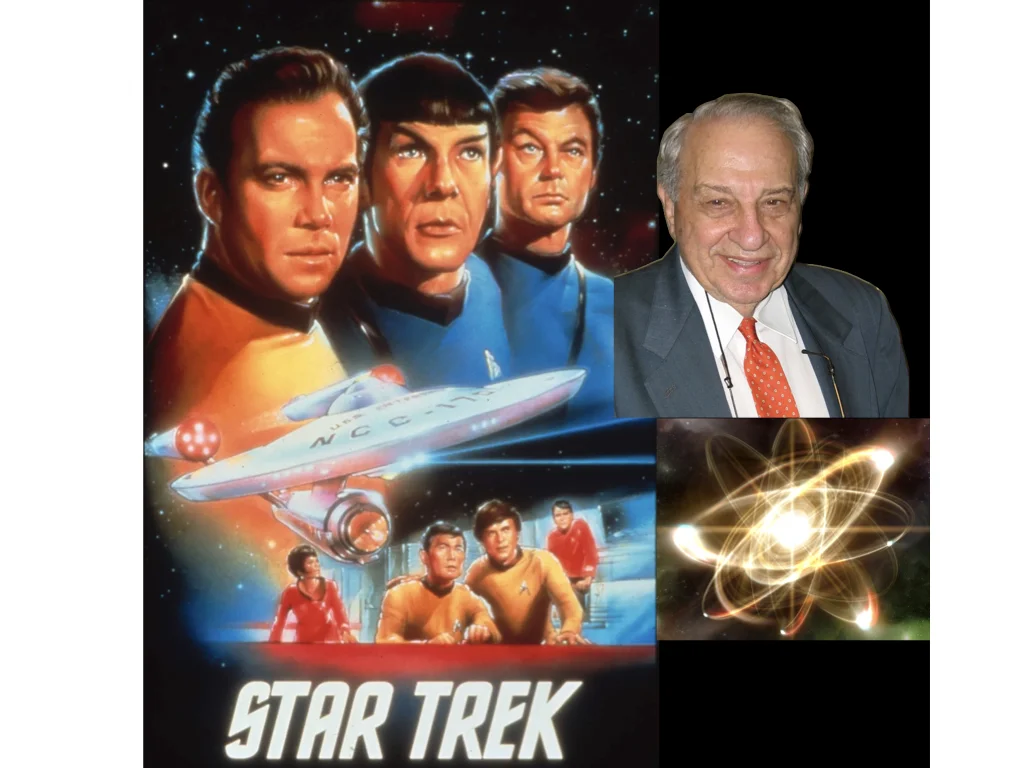
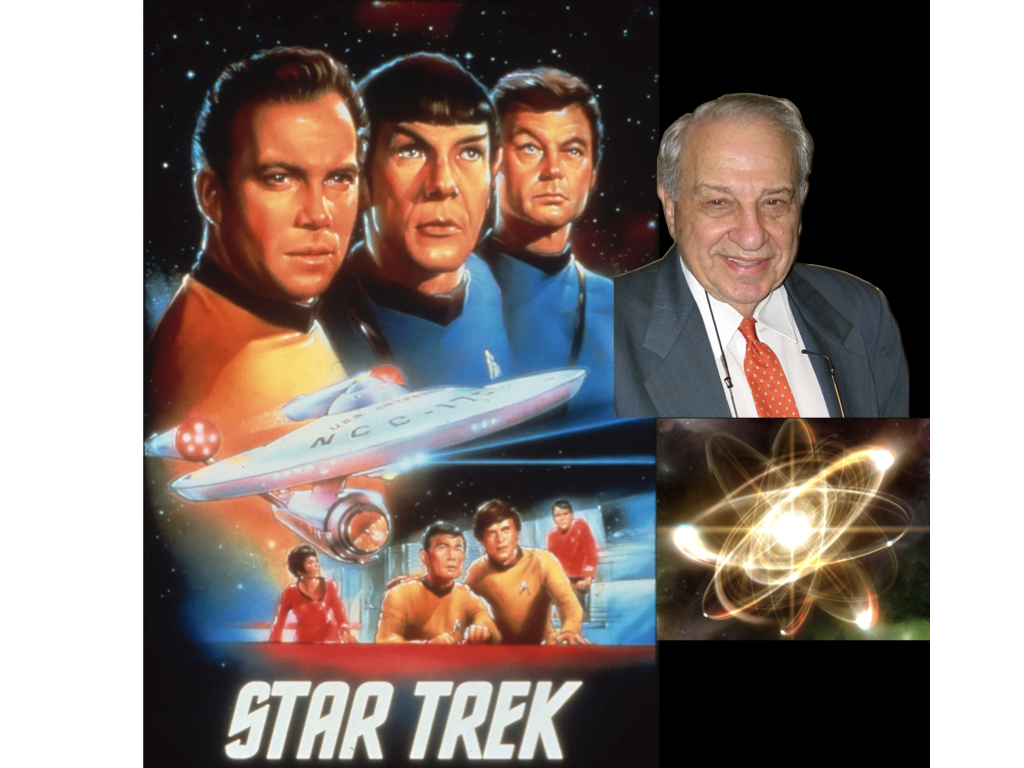
Rudy Marcus, a Nobel-winning chemist, inspired generations with his teaching and passion for science, leaving a lasting impact even at 91.
A Lifelong Dedication to Learning and Mentorship
Rudy Marcus wasn’t just a distinguished chemist; he embodied the essence of lifelong learning and mentorship. His passing at nearly 103 is a poignant reminder of the impact one person can have on generations of students and fellow researchers. Even at 91, he taught a course that captivated his students, leveraging his remarkable legacy in chemistry. This wasn't just about passing down information; it was about igniting a passion for discovery that remained alive in him until the very end.
The Pull Toward Classical Principles
Enrolling in his Chemistry 166 class during the second spring of my PhD program, I sought a classical approach to statistical mechanics. Many modern courses emphasize advanced tools such as renormalization-group methods or topological order, which can sail over the heads of students who may not yet have a firm grasp of foundational principles. I was drawn to the core concepts instead. That’s why I opted out of the typical physics curriculum for a more traditional trajectory focused on understanding fundamental theories, rather than just their applications.
Engaging Foundations of Thermodynamics
Marcus opened the semester with a revisitation of Boltzmann's H theorem, a cornerstone of thermodynamics. His approach to rederiving this theorem felt like a journey through history. He engaged us in foundational arguments about entropy and the second law of thermodynamics. There’s something captivating about this kind of instruction: it feels less like you're learning a subject and more like you’re stepping into a time machine of intellectual legacy. The experience gave a tangible sense of touching the roots of modern science, a highlight that set the tone for the rest of the semester.
Engaging With Complex Concepts
As the course progressed, Rudy guided us through the essentials of statistical mechanics, including the Fokker–Planck and Langevin equations, which model random processes. These aren’t just dry equations; they’re keys to unlocking a deeper understanding of systems in various states, ranging from chaotic to predictable. His direct engagement in rederiving these intricate formulas ensured we grasped complex concepts deeply. I often found myself referring back to my notes rather than the recommended textbook, a testament to his clarity and depth. This highlights a striking aspect of education: sometimes, the discussion around a topic is more enlightening than the prescribed texts that accompany it.
Realizing the Impact of the Fluctuation-Dissipation Theorem
My experience culminated in a project on quantum master equations, a topic we had explored during lectures. The knowledge I gained truly crystallized my understanding of the fluctuation-dissipation theorem, which plays a vital role in studying systems slightly out of equilibrium. Each lesson didn't merely elucidate the subject matter; they deepened my appreciation for theoretical physics. The patterns in thermal equilibrium and their deviations began to form a web of understanding that has enriched my studies ever since. (And this is the part most people overlook: the power of a single teacher's influence can resonate through years of academic pursuit.)
The Persistence of Curiosity
Rudy’s commitment to science remained palpable long after the course ended. Even at 91, he continued to engage in research and sought updates on quantum information theory—a field he didn’t directly work in but maintained an underlying curiosity about. This enthusiasm for learning demonstrated that age never truly dampens one’s intellectual spirit. It's a sentiment that rings particularly true in academia, where the pursuit of knowledge often flourishes best in environments rich with inquisitiveness.
A Remarkable Background
What stands out is an anecdote from a dinner where he shared memories of his early life in Montreal. The high school he attended, Baron Byng, fostered talent from a diverse group of students, shaped more by socio-economic pressures than elitist educational practices. This institution wasn’t just a school; it served as a crucible for prominent figures, having nurtured Marcus as well as others who went on to make notable contributions in various domains. Such backgrounds often breed resilience and creativity—qualities that can’t be taught but have to be cultivated.
Legacy Beyond Academia
Perhaps even more noteworthy than his teachings was Marcus's Nobel Prize-winning contribution to chemistry as a theorist. He pioneered Marcus theory, which predicts how electrons transfer between molecules—an essential principle that continues to have implications in organic chemistry and material science. Despite his immense achievements, he exhibited remarkable humility, mentioning his work only in passing during lectures. This speaks volumes about his character; real genius often exists with a level of grace that doesn’t seek the limelight.
A Lasting Impression
In 2022, I reached out to him to send a holiday card, and he responded promptly, expressing that his research group continued to meet over Zoom. Even at 98, his curiosity and dedication to inquiry shone bright. This dedication might be rare, but it serves as an inspiration, showing that intellectual engagement doesn't have an expiration date.
Reflecting on His Legacy
Rudy Marcus passed away in July just days shy of his 103rd birthday, leaving an indelible mark in the field of chemistry. As I still aim to comprehend Marcus theory in depth, the broader lesson isn’t just about mastering a complex subject; it’s about the unwavering commitment to exploration and mentorship. Emulating his practice—embracing curiosity and fostering learning—feels like the most profound honor I can pay to his memory.
Looking Ahead: The Lasting Influence of Educators
This brings to light a greater significance: what will the next generation of scientists take from figures like Marcus? If you're working in this space, you’ll understand that mentorship and an unyielding passion for learning can shape not just individual careers but entire fields. The influence of an educator extends far beyond the classroom; it transforms how future scientists engage with their work, challenges them to remain curious, and urges them to instill that same mindset in their own students. As we celebrate the life of Rudy Marcus, we must also recognize the critical role educators play in shaping scientific inquiry and intellectual fervor for years to come.
Discussion
Sign in to join the discussion.