AI tools can enhance citizen science efforts by extracting valuable ecological data from platforms like eBird and iNaturalist, aiding ecosystem research.
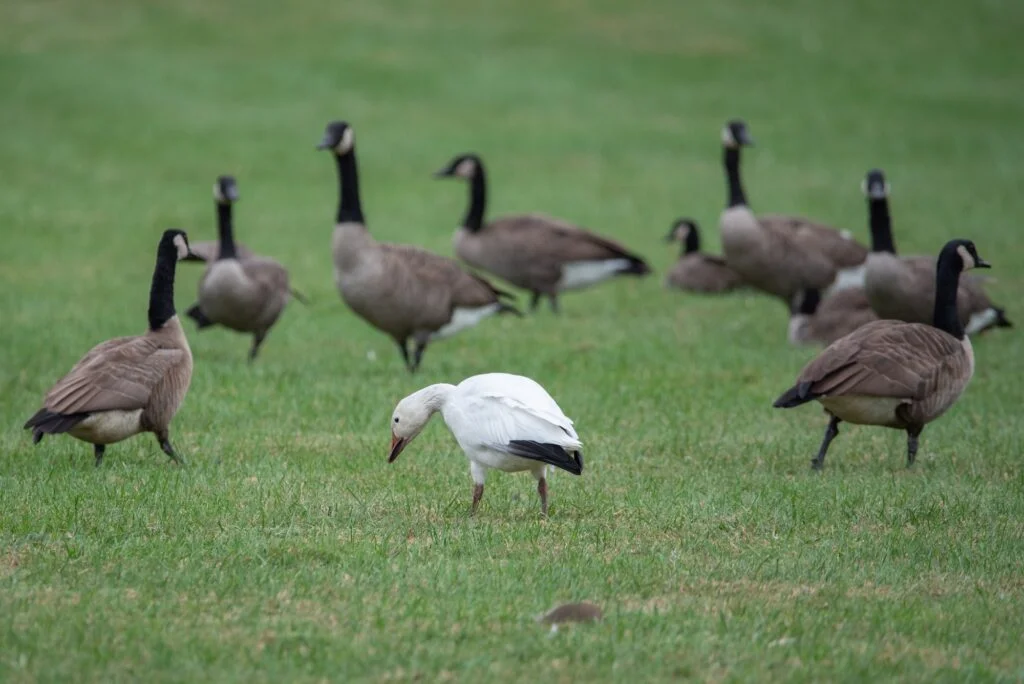
Across the globe, millions of individuals contribute to the understanding of ecosystems, often without realizing the significance of the data they collect. Platforms such as eBird and iNaturalist are treasure troves of observations made by birdwatchers and nature enthusiasts, yet much of this valuable information is hidden within user comments. A novel study from the University of Michigan highlights how artificial intelligence can facilitate the extraction and categorization of this data, ultimately advancing ecological research.
This research, which utilized AI models like Claude and ChatGPT, demonstrated the ability to identify and extract comments containing pertinent ecological information. The team’s findings revealed the emergence of non-native plant species along the West Coast—a detail that might have gone unnoticed without this technological intervention. Lead author Hengxing Zou, currently a postdoctoral scholar at the U-M Institute for Global Change Biology, pointed out the broad potential of this approach, stating, “There’s a lot of data out there just waiting to be mined.”
Supported by federal funding from the U.S. National Science Foundation and the USDA, the research was published in the Proceedings of the National Academy of Sciences. The focus was on comments that documented interactions between species. Although technology has vastly improved the data available on individual species, understanding how these species interact poses significant challenges due to the need for continuous observation—something that’s impractical given the scope of natural environments.
Zou commented, “Species interactions require direct observation, and that’s really hard to come by, especially with limited monitoring capacity.” As human observers cannot possibly gather data around the clock, leveraging the comments from a global community of nature lovers offers a clever workaround. According to senior author and associate professor Kai Zhu, “AI can help turn scattered observations into ecological datasets that reveal how biological communities are responding to global change.”
Case Studies: Revealing Hidden Ecological Interactions
The study explored two specific case studies to validate its methodology. The first emphasized plant-pollinator interactions involving the West Coast lady butterfly (found along the western U.S. and Mexico) and relevant observations recorded on iNaturalist. The second focused on various community interactions among Michigan birds as chronicled by eBird contributors. Each observation uploaded inherently includes crucial metadata like location and time, making the extraction process more straightforward.
In the plant-pollinator case, the interactions were often evident, such as a butterfly resting on a flower, while bird interactions encompassed a broader range of behaviors—everything from predation to competition among species at a feeding site.
Senior author Brian Weeks expressed enthusiasm regarding the diversity of natural observations contributed by the public: “The excitement of these observations extends beyond their utility for science; they illustrate the joy that comes with observing wildlife.” As researchers faced the overwhelming task of parsing millions of comments, they realized that AI could markedly streamline this process.
Efficiency through AI: A Time-Saving Solution
Collaborating with undergraduate researchers from ecology and computer science, the team crafted prompts for the AI models, examining their effectiveness in extracting and classifying ecological interactions. Initial tasks involved using ChatGPT to extract relevant interaction comments for review. Compared to a human's time investment, Claude completed tasks that once required hours of manual sorting in mere minutes, marking a significant efficiency gain.
Despite the controversies surrounding AI in academic settings, Zou defended its use in this context, suggesting that it supplementarily enhances human effort rather than supplanting it: “We’re simply using AI to process vast amounts of data, rather than analyzing or replacing the creativity of scientific work.” This project marks a significant step in employing new technology to unearth an underutilized resource—the observations collected by engaged citizens.
Moving Forward: Expanding Data Sources in Ecology
The essence of this research connects back to the foundational practices of ecology. “It highlights the tradition of individuals going out into nature and recording observations of interest,” Zou noted, emphasizing the untapped potential still harbored in these comment sections. Additional collaborative efforts included researchers from the University of California Santa Cruz, Georgia Institute of Technology, and Michigan State University, along with support from various foundations dedicated to ecological research.
This marriage of citizen science and AI not only underscores the robust potential of participatory observation but also reaffirms the vital role of community engagement in advancing ecological knowledge. By creating datasets drawn from real-world observations, researchers can better explore the intricate dynamics of ecosystems, a necessity in light of ongoing global environmental changes.
The implications are substantial: as technology progresses, so does the capacity to transform unstructured data into actionable insights, all while keeping the spirit of ecological inquiry alive. There remain countless observations ready to enrich our understanding of biodiversity, interactions, and ecosystem health.

Discussion
Sign in to join the discussion.