The University of Michigan's Center for Innovation in Detroit has celebrated a key construction milestone, bringing together leaders to mark its anticipated 2027 opening.
Progress at the University of Michigan Center for Innovation
DETROIT—The University of Michigan Center for Innovation (UMCI) has recently marked an important milestone in the construction of its new facility. On Friday, university, industry, and community leaders convened to acknowledge the significant advancements made towards the center’s opening, scheduled for 2027, at 2121 Cass Ave. These gatherings serve as a reminder of the pressing need for innovative spaces in urban communities, where the intersection of academia and industry can pivotally influence local economies.
Sustainable Design and Features
The gathering not only celebrated the ongoing construction but also showcased the vision for the 200,000-square-foot all-electric facility, designed with a commitment to achieving LEED Platinum certification. This ambitious project incorporates various sustainable elements, such as reduced energy and water consumption, ice-based thermal energy storage, a green roof, native landscaping, and renewable energy sourcing. These features aren't just trendy—they reflect a growing recognition of institutions' responsibilities toward environmental stewardship in urban settings.
More than a set of environmentally friendly perks, these features align with global efforts to combat climate change. By integrating energy-efficient systems and materials, the UMCI sets a standard not just locally, but nationally for how academic facilities can effectively cut down their carbon footprints. It’s a signal that the university is willing to invest in a sustainable future—where education and ecology can go hand in hand.
Community and Academic Partnerships
Scott Shireman, the executive director of UMCI, emphasized the project’s broader significance, stating, “This milestone represents more than the progress of a building. It represents the momentum behind a shared vision for what is possible when the University of Michigan, Detroit and our partners come together.” This is more significant than it looks on paper; collaborative initiatives like these can break down barriers and create a truly interdisciplinary atmosphere that fosters real-world solutions.
Partnerships with various academic units within the University underscore the center's ambitious goals. Jonathan Massey, dean of the Taubman College of Architecture and Urban Planning, noted that their Master of Urban Technology degree at UMCI will bridge academic excellence with Detroit's dynamic innovation scene, enabling students to engage meaningfully with local communities. Such programs elevate the educational experience for students, allowing them to not only learn theory but apply it in a city rich in challenges and opportunities.
If you're working in this space, you understand that collaboration is essential. The ability to connect students with industry leaders and local residents enhances the educational framework and has the potential to yield innovative, viable solutions that benefit all parties involved.
Event Highlights and Future Vision
The event featured remarks from key stakeholders, including U-M President Domenico Grasso, U-M Board of Regents Chair Michael Behm, and Christopher Ilitch, the president and CEO of Ilitch Cos. Their presence highlighted a collective commitment to the center's vision and future impact. It’s uncommon to see such a cohesive display from academia and industry leaders, suggesting that they’re not only aligned in their mission but also that the importance of this center extends beyond the university's walls.
And yet, while the excitement is palpable now, the center's long-term capability to achieve its projected goals will ultimately depend on sustaining this momentum. Leaders must ensure continuous community input and support as the center grows. As they plan for the future, it raises the question: will they be able to evolve alongside the fast-paced changes in both technology and community needs?
A Lasting Symbol of Commitment
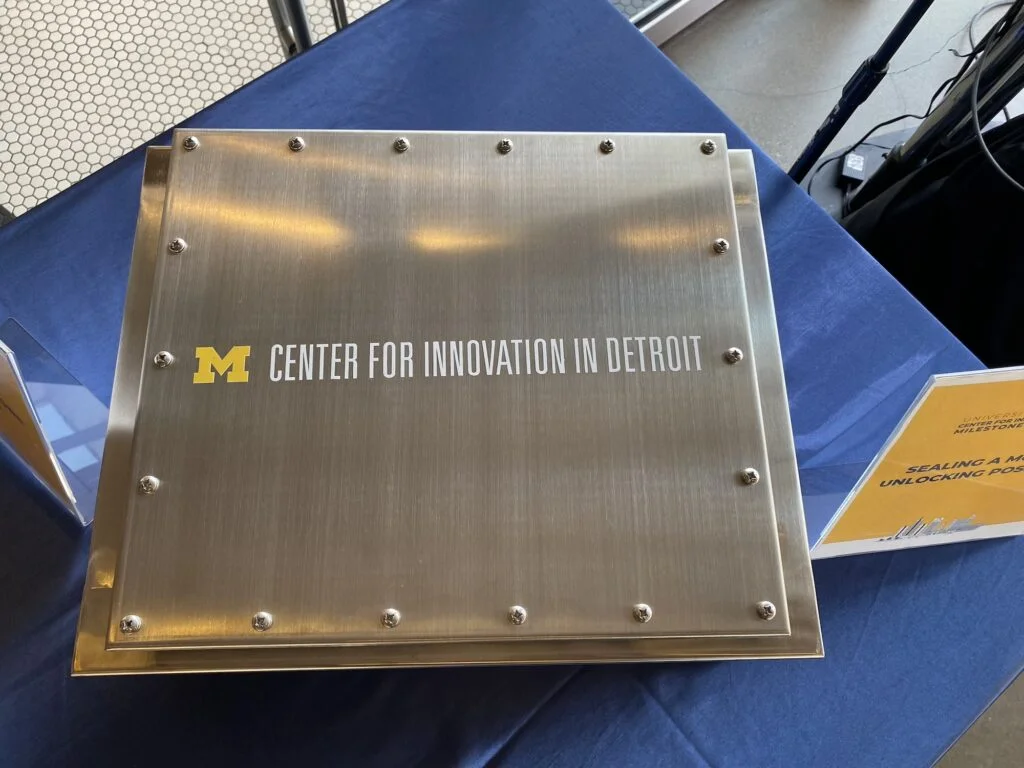
During the celebration, a time capsule was presented as a testament to the milestone. It contains significant items, such as original floor plans, symbolizing the University’s dedication to advancing opportunities in Detroit. Attendees had the chance to view the time capsule and tour the construction site afterward. This act isn’t merely ceremonial; it serves as a literal and figurative snapshot of the aspirations and commitments that will shape the center’s future.
When opened in the fall of 2027, the U-M Center for Innovation is expected to serve not only as an academic hub but as a beacon for workforce and professional development, youth engagement, and public programming, cementing its role in the vibrant ecosystem of Detroit. The implications here extend beyond the university; they resonate through the community and into the broader landscape of urban development. The center aims to be more than just a building—it strives to be a cornerstone for economic revival and educational growth in a city that has seen its share of challenges.
Implications for the Future
The establishment of UMCI represents an investment in Detroit’s future, indicating a recognition that urban revitalization requires a multifaceted approach. As the center opens its doors, it could become a model for other cities grappling with similar issues. By bolstering partnerships between academia and industry, the center could ignite a template for collaborative solutions that tap into local talent while addressing community needs.
However, the real test will be the continuity of engagement and adaptability to shifting demands. If UMCI can successfully bridge the gaps between education, local industry, and community services, it may very well become a blueprint for future urban development projects elsewhere. That’s something both Detroit and the University of Michigan can take pride in.

Discussion
Sign in to join the discussion.