Lawrence Katz, a Harvard economist, receives the 2025 Citation Laureate honor for his influential work in labor economics and economic inequality.

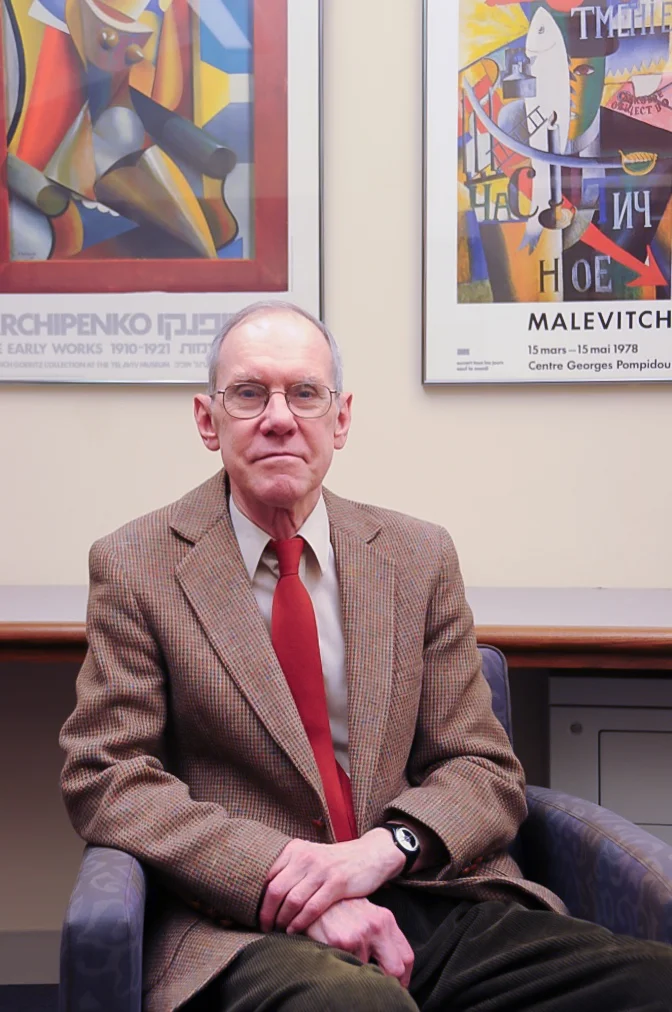
Lawrence Katz, serving as the Elisabeth Allison Professor of Economics at Harvard University, has been bestowed the prestigious title of 2025 Citation Laureate by Clarivate. This accolade is presented to scholars whose research is recognized globally, making them strong candidates for a future Nobel Prize.
With a career at Harvard that began in 1986, Katz has focused his research on crucial themes such as wages, technological change, and economic inequality. His impressive body of work has garnered nearly 26,000 citations across 72 academic publications, reflecting the substantial impact he’s had on both the academic community and public discourse.
On receiving the accolade, Katz expressed appreciation for the recognition, especially as it coincides with honoring his collaborator and former student, David H. Autor. "It's very nice to see the research recognized," he stated, emphasizing their joint contributions to the field.
Significance of the Citation Laureate Award
This year's selection includes a total of 22 Citation Laureates, highlighting influential researchers in various scientific domains. Clarivate positions its laureates as individuals distinctly likely to receive Nobel recognition, based on citation metrics that indicate the relevance and reach of their findings. Remarkably, since the inception of this program in 2002, 83 Citation Laureates have subsequently been awarded Nobel Prizes.
Exploring Katz's Key Contributions
Katz’s work transcends mere number crunching; it generates meaningful insights about how education and technological advancement intertwine with economic mobility. Notably, his book “The Race Between Education and Technology,” co-authored with Nobel laureate Claudia Goldin, examines historical patterns of inequality in economic contexts, suggesting that education levels historically kept pace with technological changes, leading to reduced inequality.
“We showed that inequality narrowed during the first half of the 20th century, when education kept pace with technological change.”
Katz and Goldin note that the mid-20th century's focus on integrating education access led to significant shifts in occupational structures in the United States. Traditionally, as education became more widely available through grassroots movements, it facilitated a transition from agricultural jobs to roles that commanded higher economic returns.
Personal Motivations and Societal Impact
Katz's interest in economic disparities is deeply personal, shaped by early experiences in Los Angeles and a commitment to understanding how socioeconomic status affects opportunities. His academic journey at UC Berkeley influenced his focus on land-use regulation and residential segregation, leading him to examine issues like NIMBYism and its effects on housing access.
In exploring how education intersects with local community structures, Katz is particularly concerned about the consequences of segregated neighborhoods, advocating for policy reforms that could promote greater economic mobility across populations. He argues that a balance must be struck to enhance living conditions for disadvantaged members of society without compromising the economic stability of those with more resources.
Research Methodologies: From Labor Economics to Big Data
Katz has been a trailblazer in exploring the dynamics of economic inequality through data analysis. His work with colleagues such as Richard Freeman and Kevin Murphy led to the establishment of frameworks that dissect the root causes of wage disparities, attributing significant portions to educational access and shifts in labor market demands.
As part of his tenure at the U.S. Department of Labor as chief economist from 1993 to 1994, he witnessed the necessity of empirical, evidence-based policymaking, pushing his research towards robust methodologies like randomized control trials to establish causal relationships in socioeconomic studies. He co-founded J-PAL North America to encourage similar initiatives among researchers in the social sciences.
Long-Lasting Legacy of the Moving to Opportunity Program
One of Katz's most significant undertakings, the "Moving to Opportunity" program, is heralded as a landmark social science experiment. Its intent was to provide low-income families the chance to relocate to neighborhoods with better resources. Early results indicated little economic benefit for parents, but follow-up studies revealed substantial positive effects on the students involved, suggesting that growing up in advantageous environments can alter life trajectories significantly.
The initiative reinforced the notion that integrated neighborhoods yield advantages for less-privileged children without detrimental effects on the economic prospects of their more affluent counterparts. This paradigm shift resonates with contemporary discussions on effective policy interventions to combat inequality.
The Importance of Mentorship in Academia
Katz is not just an eminent scholar but also a dedicated mentor, recognized frequently in acknowledgments in economics literature. He values his role in shaping future economists, noting that fostering the success of students translates into broader impacts on science and policy. The collaborative environment at Harvard allows him to engage deeply with talented individuals, perpetuating a cycle of intellectual growth and opportunity.
As Katz continues to contribute to economics both through his research and as an educator, his recognition as a Citation Laureate underscores the enduring relevance of his work on the issues of education, inequality, and the forces shaping labor markets. His insights offer a blueprint for responding to today’s economic challenges and guiding future generations in the quest for equitable solutions.

Discussion
Sign in to join the discussion.