New research highlights the positive effects of job training programs for displaced workers, suggesting strategies for navigating an AI-affected job market.

AI's Influence on Employment and the Role of Job Training
The rising concern surrounding job displacement due to artificial intelligence (AI) adoption is prompting many to assess the future of their careers. Surprisingly, a survey from the Federal Reserve Bank of New York indicates that instead of layoffs, a significant number of firms incorporating AI are focusing on retraining their existing workforce. However, the effectiveness of these job-training initiatives remains underexamined, especially concerning how they aid in adapting to a rapidly changing job landscape.
New Insights from Workforce Training Research
A recent study spearheaded by researcher Karen Ni from the Harvard Kennedy School addresses this research gap. It analyzes the outcomes of participants in job-training programs aligned with the U.S. government's Workforce Innovation and Opportunity Act. By examining employment records before and after training, the study provides a nuanced view of worker earnings, particularly for those transitioning into roles deemed “AI-exposed” — occupations whose tasks could be automated through various technologies.
The findings reveal that while job-training programs generally enhance earnings for displaced workers, those moving into high AI-exposed roles tend to earn less than their peers targeting roles with lower AI exposure. This underscores the complexity of navigating employment options in an AI-influenced world.
Tracking Worker Transitions Post-Training
Ni emphasizes the importance of understanding the impact of retraining on workers at risk of displacement. The objective is to discern whether these programs can effectively elevate job prospects and earnings. The emphasis is particularly on supporting lower-income workers, who may be disproportionately affected by technological disruptions.
With a sample of workers earning an average of $40,000 annually, the research reveals a blend of individuals undertaking major career shifts and those seeking to return to similar jobs. The latter group seems motivated to acquire new skills to enhance their employment prospects, regardless of whether AI is the cause of their job loss.
AI Exposure Across Different Occupations
The study highlights varying degrees of AI exposure across jobs. High-risk roles typically include customer service representatives, cashiers, and clerical positions, whereas low-risk categories tend to be manual labor jobs like movers and industrial truck drivers. Alarming shifts in the job market raise questions: how adaptable can workers be in this changing environment?
Main Findings and Practical Implications
The analysis identified key patterns: workers transitioning from high AI-exposed jobs faced 25% lower earnings returns compared to those moving from low AI-exposed occupations. Furthermore, those targeting roles with high AI exposure reported a striking 29% hit to their earnings relative to peers who sought opportunities requiring more general skills.
For displaced individuals, these insights suggest a strategic pivot: considering roles with lower AI exposure could yield better financial outcomes. However, outcomes hinge on diverse factors including the type of training received and the specific occupational skills targeted, marking a significant area for further research.
Understanding Retrainability: The Index
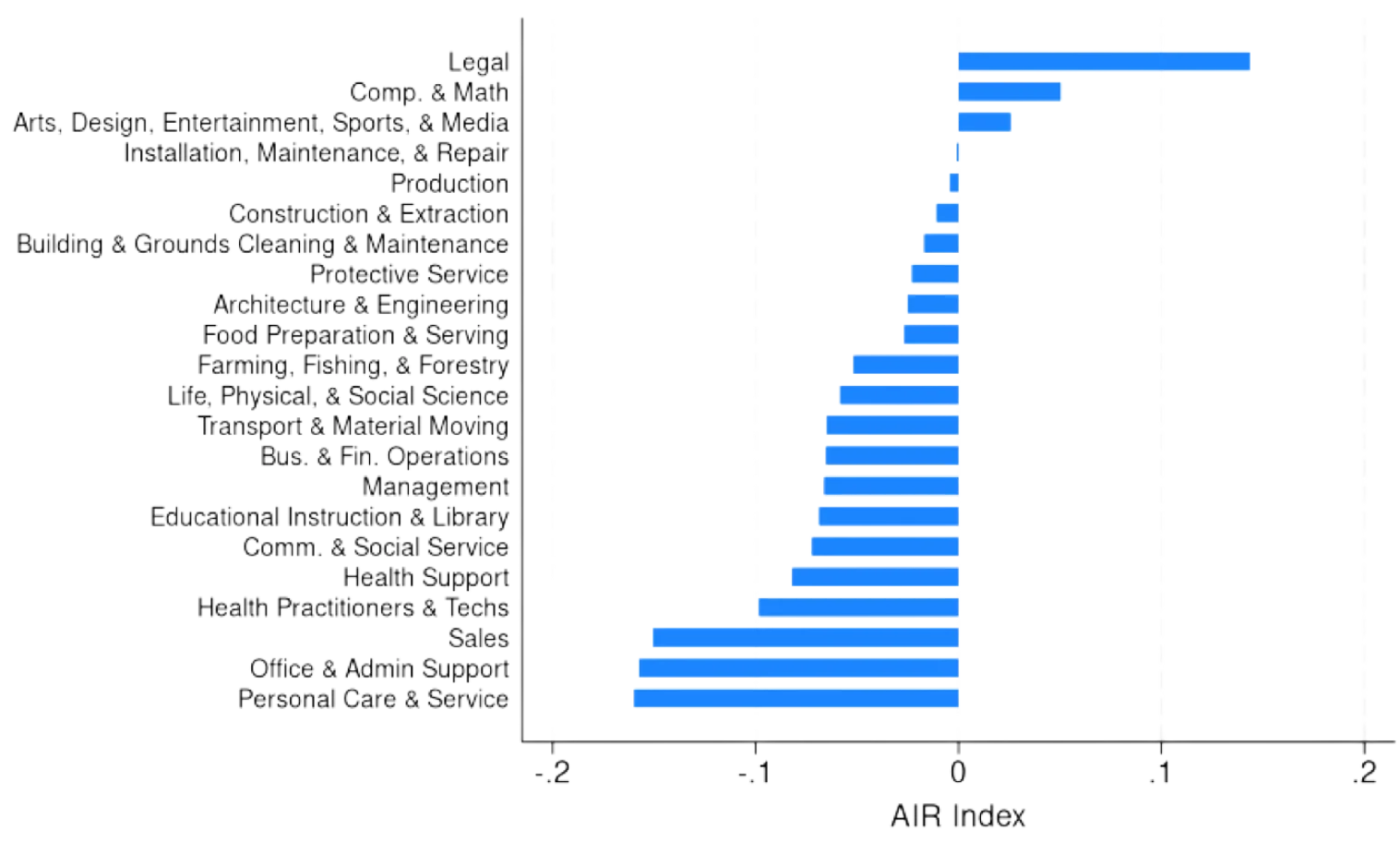
Ni's research also introduces an AI Retrainability Index, designed to evaluate occupations based on their adaptability for AI-oriented roles and their potential for higher earnings. The findings reveal that only three job categories—legal, computational and mathematical, and arts/design/media—show robust potential for retraining into lucrative AI-exposed roles. This raises critical questions about the effectiveness of retraining for workers from lower-wage backgrounds.
In a surprising turn, the research concludes that a notable 25% to 40% of professions hold potential for retraining efforts, suggesting that many lower-income workers may indeed transition into higher-skilled, AI-relevant positions more readily than previously expected.
Conclusions and Looking Forward
This study not only delineates the outcomes of current job training initiatives but sheds light on future workforce strategies in an AI-inundated economy. For those affected by job displacement, understanding which roles to pursue—especially positions with lower AI exposure—can significantly alter their career trajectories. The discussion now turns to how training programs can be optimized to meet the demands of an evolving labor market, ensuring that workers are equipped for the challenges ahead.



Discussion
Sign in to join the discussion.