John E. Malmstad's dedication to Russian modernism and literary scholarship left an indelible mark at Columbia and Harvard, shaping generations of scholars.
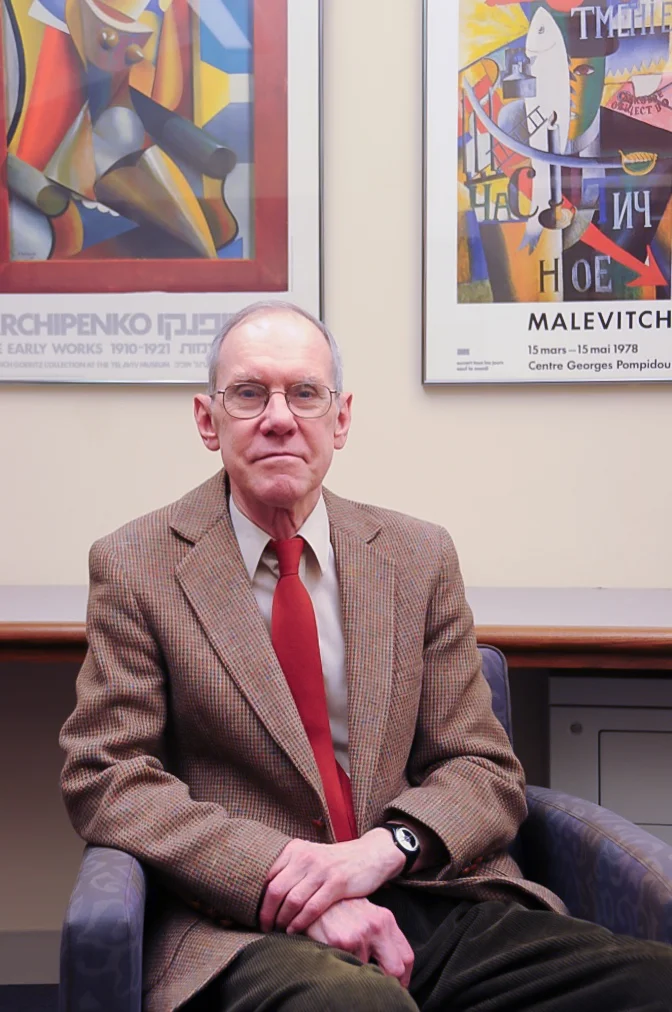
At a Faculty of Arts and Sciences meeting held on October 6, 2026, a heartfelt tribute to the late John E. Malmstad highlighted his substantial contributions to the field of Russian literature and modernism.
Born: June 25, 1941
Died: February 14, 2026
A Vanguard in Russian Studies
Spanning over five decades, Malmstad's scholarly career was distinguished by an unwavering commitment to preserving the legacy of Russian modernism—a corpus of literary works that faced censorship in the Soviet Union. His contributions are not just notable for their volume, but rather for the impact they have had on both Russian and global literary fields. Unprecedentedly, he has published a vast number of scholarly works, including 27 book-length publications, many of which remain in the Russian language and have reached audiences far beyond the confines of the United States.
While he authored a few notable English works—including a co-translation of Andrei Bely's “Petersburg” and a biography of Mikhail Kuzmin with fellow scholar Nikolai Bogomolov—nearly half of his articles were published in foreign languages, underlining his dedication to bringing Russian modernism to international attention. His rigorous academic standards set him apart from his contemporaries, especially during a time when many American scholars overlooked critical editions and biographies.
A Scholarly Journey
Malmstad was born in Bismarck, North Dakota, where his love for music, film, and literature ignited early on. Initially pursuing a path in medicine at Northwestern University, he shifted directions to major in Russian and Comparative Literature, later earning his Ph.D. from Princeton in 1969 under the guidance of eminent Russian émigré writer Nina Berberova. His tenure at Columbia University from 1968 to 1985 marked the beginning of a significant influence on the study of Russian literature.
Starting his teaching career at 27, he quickly adapted to the rigors of academia, offering foundational courses in Russian grammar and literature. His ability to engage undergraduates in a year-long Russian literature survey and conduct higher-level seminars provided students with a rich understanding of poets like Alexander Blok and Vladislav Khodasevich.
An Educator and Cultural Enthusiast
New York City's vibrant artistic community deeply influenced Malmstad. He became closely acquainted with the New York City Ballet, further integrating his scholarly pursuits with the arts; he even authored “Winter Dreams,” a ballet scenario performed in 1987. This blend of interests allowed Malmstad to enrich his teaching with interdisciplinary approaches.
When he transitioned to Harvard in 1985, Malmstad played a pivotal role during a transformative era for the Department of Slavic Languages and Literatures. As chair from 1988 to 1993 and again from 1997 to 2000, he was instrumental in appointing faculty who represented a diverse array of literary theories and methodologies. Alongside his administrative responsibilities, he remained an active scholar, shaping curriculum initiatives such as the Core and Freshman Seminars programs.
Impact Beyond Academia
Malmstad's influence on the academic community extended far beyond his administrative roles; he was a passionate advocate for liberal education, often teaching core courses on the Russian avant-garde that attracted large student groups. His classes combined literature, art, and music, characterized by his meticulous preparation and engaging presentations.
His demanding yet supportive nature made him a beloved teacher, inspiring lifelong relationships with students who have since ascended to prominent roles in academia. As he tirelessly worked on significant projects relating to Bely, Kuzmin, and Russian modernism, Malmstad also fostered connections with scholars worldwide, particularly in Russia and France.
Legacy of Service and Scholarship
His contributions to both scholarship and mentorship ensured that his legacy would endure, as he prepared the next generation of scholars to carry on his work. Colleagues remember him not just for his academic prowess but also for his collegiality and the cultural experiences they shared. His commitment to the field of Russian literature has left an indelible mark on both students and faculty alike, memorializing a scholar who understood that teaching is just as impactful as research in shaping future scholars.
Respectfully submitted by:
- Julie A. Buckler
- Michael S. Flier
- Stephanie Sandler
- Justin Weir
- William Mills Todd III, Chair
Parts of this tribute were previously published by the Kathryn W. and Shelby Cullom Davis Center for Russian and Eurasian Studies.

Discussion
Sign in to join the discussion.