NASA has identified a new crater on the Moon, created by a rare impact from a sizable object, revealing insights about lunar geology.
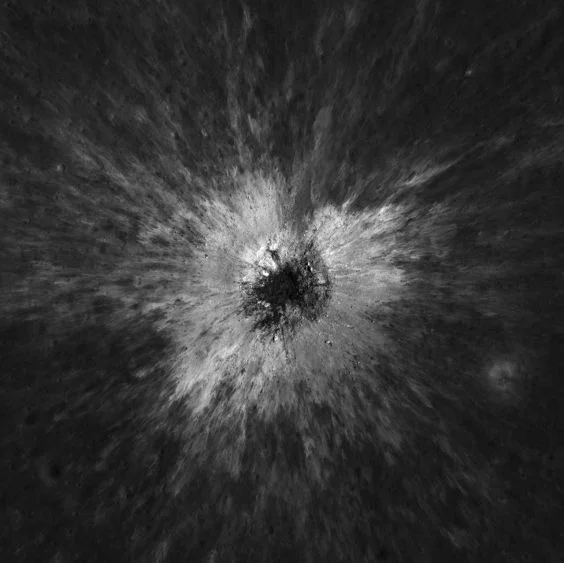
A Fresh Crater on the Moon
In spring 2024, an object the size of a six-story building collided with the Moon, resulting in the formation of a new crater. This impact not only adds another feature to the lunar surface but also offers a rare glimpse into ongoing geological activity on our celestial neighbor. The Moon, often viewed as a static body, might be more active than it's generally perceived. These kinds of impacts are more than just dramatic events; they serve as key indicators of the Moon’s geological processes and history.
Discovery Process
The Lunar Reconnaissance Orbiter (LRO), which has been surveying the lunar surface since 2009, is responsible for this discovery. It’s worth recognizing that the LRO has revolutionized our understanding of the Moon by capturing high-resolution images that document its terrain and landmarks. A significant find emerged in 2025 when NASA’s Robert Wagner identified what appeared to be an unmistakable impact crater amidst the wealth of data collected. This highlights the continuous value of ongoing observation missions, as they provide insights that would otherwise be lost in the vastness of space.
Wagner described the moment of discovery with a sense of excitement: “I just stopped, dropped everything, and started looking into what that spot was. It was by far the most obvious impact debris pattern I’ve ever seen in one of these images.” His reaction underscores the thrill that comes with unexpected scientific findings. The LRO’s persistent imaging efforts showcase that even after decades of study, new revelations are still possible. This speaks to the nature of space exploration; there's always something new waiting to be uncovered.
Size and Characteristics
The newly formed crater measures approximately 728 feet in diameter and is 141 feet deep. Such impacts are astonishingly rare, with events of this magnitude occurring about once a century. The implications are profound; this crater gives scientists a chance to examine fresh lunar material that hasn't been altered by millions of years of cosmic weathering. The findings, detailed in a research paper published in Science Advances, emphasize the uniqueness of this event: “This event constitutes a statistically rare, effectively once-in-a-lifetime observation.” It’s clear that this isn't just another crater; it's a valuable window into the Moon's tortured past.
Thermal Analysis and Impact Gardening
To gather more details about the crater, NASA also employed the LRO’s thermal imaging camera. This high-tech tool is crucial for understanding the crater’s characteristics and surrounding environment. The analysis revealed that the area surrounding the crater is about 16 degrees Fahrenheit cooler than the average lunar surface temperature. This phenomenon is attributed to “impact gardening,” a term that refers to the process where the impact disrupts the Moon's regolith. As such, the material around the crater doesn’t retain heat as effectively, leading to this notable temperature difference. It’s fascinating how impacts can cause unforeseen changes in the surface properties of celestial bodies.
Here’s the thing: earlier assumptions about the Moon's geological stability suggested that surface material shifts occurred every 10 million years. However, more recent studies indicate this turnover happens approximately every 80,000 years. This revision illustrates that the Moon is more dynamic than previously thought. The notion that we were viewing a locked-in, static environment is shifting, reminiscent of the evolving understandings often seen in planetary geology. One small crater can lead to big questions about the Moon's history and activity, proving that every observation matters.
Implications for Lunar Science
This new discovery provides valuable insights into lunar geological processes and its history of impacts. What this means for you—if you're working in this space—is that such findings can lead to broader implications for understanding not just lunar geology, but also planetary geology at large. As scientists continue to analyze the crater, they may uncover clues that change how we think about the Moon and other bodies in the solar system.
(And this is the part most people overlook) the implications of this discovery stretch beyond academic interest. Understanding the Moon's geological activity can inform future missions, from assessing potential landing sites to identifying resources. Moreover, it raises questions about the frequency and scale of impacts across the solar system. The Moon acts as a time capsule, preserving a record of cosmic events that can enlighten not just our understanding of our natural satellite but also provide insights into the formation and evolution of other terrestrial bodies.
As we refine our methods and technologies, and as missions like the LRO continue to produce wealth in observational data, there's every reason to expect these kinds of discoveries will become more frequent. The universe remains full of surprises, and advancements in our analytical capabilities will only enhance what we know about places like the Moon.
Lead Image: NASA Goddard/Intuitive Machines/Robert Wagner


Discussion
Sign in to join the discussion.