NASA's first space shuttle, Enterprise, paved the way for reusable spaceflight, marking a key moment in aerospace history.
The Unveiling of the Enterprise
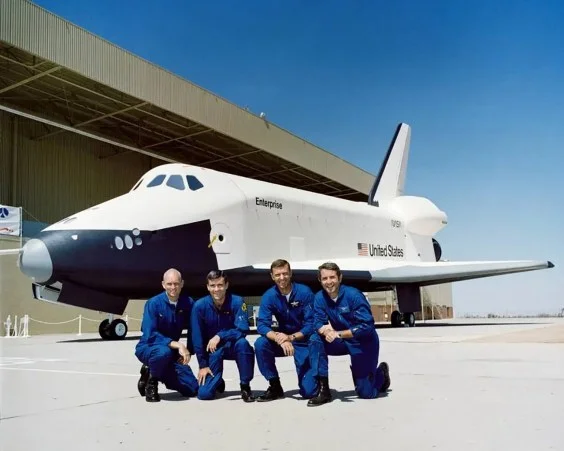
On September 17, 1976, NASA showcased its first space shuttle, Enterprise, at the Rockwell International manufacturing facility in Palmdale, California. The unveiling drew notable figures, including Gene Roddenberry, the creator of Star Trek, and members of the show's cast. This event wasn't just a technical milestone; it marked the intersection of pop culture and aerospace, demonstrating how deeply public enthusiasm for space exploration had permeated American society in the 1970s.
The decision to name the shuttle Enterprise came after a passionate campaign by about 100,000 Star Trek fans. They advocated for the name through a petition drive that extended even to the highest levels of government. In an era when television was becoming a dominant medium and cultural phenomenon, this movement reflected a broader desire for a future that blended scientific advancement and imaginative exploration. It led to President Gerald Ford granting the request, shifting from the original name planned—Constitution. This act of honoring a beloved television series not only highlighted the influence of fandom but also underscored the pervasive impact of science fiction on contemporary aspirations and technological dreams.
Enterprise’s Role and Mission
Despite its prominence, Enterprise (officially known as Orbital Vehicle-101 or OV-101) never made it to space. Instead, it was utilized for crucial test flights and diagnostic evaluations, laying the groundwork for subsequent operational shuttles—five in total. This distinction raises an interesting point: the shuttle was emblematic of innovation, but it also served a formative role in shaping future missions. Today, Enterprise resides at the Intrepid Sea, Air & Space Museum in New York City, where it stands as a relic of both ambition and unrealized potential.
Initially, there were plans to modify Enterprise for orbital missions. However, thousands of design modifications led NASA to opt for the Space Shuttle Challenger (OV-102) instead. That decision speaks volumes about the iterative nature of aerospace engineering, where lessons learned often outpace initial designs. The tests began with Enterprise being strapped to a modified Boeing 747, marking its first independent flight on August 12, 1977. By October, it had completed four additional free flights, gathering essential performance and safety data. The significance of these excursions cannot be overstated; they were pivotal in establishing testing protocols that would go on to support future human spaceflight missions.
Lessons Learned: Control Issues and Their Implications
The importance of these tests became evident during the final flight, which uncovered a control issue termed Pilot-Induced Oscillation (PIO). This was a crucial discovery that informed the designs of later shuttles, including Columbia, which took to the skies in 1981. Even the most well-laid plans in aerospace can falter if unintended mechanical issues arise. This encounter with PIO served as a stark reminder of the complexities involved in flight dynamics and safety protocols, continually shaping the discourse on how to approach spacecraft design.
A Look Back at the Shuttle Program
NASA's shuttle program operated from the early 1980s until 2011, a period marked by significant scientific achievements and dire tragedies. The missions weren't just about travel; they launched 135 missions—incredible feats that included deploying the Hubble Space Telescope and building significant portions of the International Space Station. Yet, the program also faced relentless scrutiny for safety concerns and escalating costs, particularly after two tragic disasters—a reality that balances the triumphs of human ingenuity with the sobering risks involved in space exploration.
It's astonishing that a vehicle designed for widespread accessibility became a symbol of the prohibitive costs of spaceflight. The duality of the shuttle program highlights the tension between ambition and caution in human space exploration. During its three-decade tenure, the fleet achieved remarkable milestones while also confronting the harsh realities of engineering challenges, budget constraints, and the emotional weight of lives lost. That's a tough pill to swallow for any program fundamentally tied to humanity’s quest for knowledge.
The Legacy of the Enterprise
Enterprise's debut marked an important chapter in the evolution of reusable spacecraft. The lessons learned during its development and testing still influence modern aerospace efforts. For instance, many of the procedures born from testing the Enterprise can be seen in advancements in contemporary space travel technologies. This event also serves as a testament to the enthusiastic dedication of Trekkies, intertwined with humanity's quest for space exploration. As we look toward future missions—deep space, Mars colonization, or beyond—the spirit of that initial unveiling persists. Just think about it: a TV show influencing real-world technology and exploration. Pretty compelling, right?
What's Next: The Future of Space Exploration
If you're working in this space, consider how legacy and innovation interplay within projects today. The Enterprise is more than a shuttle; it's a narrative that intertwines public enthusiasm with aerospace possibilities. As we move into an era of private spaceflight and unprecedented technological advancements, the historical significance of the Enterprise serves as both an inspiration and a cautionary tale. The aspirations of yesterday's Trekkies resonate now as we look toward the next chapter in human exploration, reminding us how deeply our collective imagination can shape tangible realities.
What this means for you is simple: the dialogue between fiction and engineering continues, and the lessons from past programs like the shuttle are crucial for understanding our potential paths ahead. The intersections of culture, technology, and dreams will always be a rich field for exploration, creating a horizon of opportunity waiting just beyond our reach.
Enjoying Nautilus? Subscribe to our free newsletter.
Lead Image: NASA


Discussion
Sign in to join the discussion.