Recent studies on Saturn's moon Enceladus suggest promising avenues for detecting potential life in its subsurface oceans.
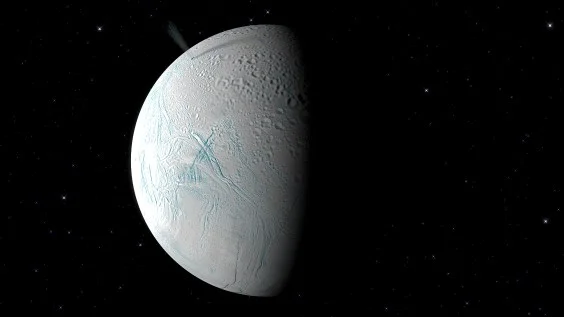
Extraterrestrial life remains an open question, but evidence points to conditions that could support it, particularly on Enceladus, one of Saturn's moons. Hidden beneath its icy exterior, vast salty oceans and energy from hydrothermal vents create an environment that may allow for life to flourish. Recent studies have raised hopes for finding this life and pinpointing effective detection methods.
New Insights on Detection
The first significant study explores how we might actually go about discovering life, assuming it exists. NASA’s Cassini spacecraft, which conducted several flybys of Enceladus beginning in 2005, collected particles ejected by volcanic geysers—particles that contribute to one of Saturn's faint rings. Researchers employed long-term laboratory experiments alongside theoretical modeling to better understand how Enceladus' oceanic water transitions to outer space. The findings illustrate not just the mechanics involved but also the potential for unexpected surprises in these processes.
As gas-filled bubbles rise from deep-sea hydrothermal vents, they traverse the subsurface oceans and eventually burst at the surface, releasing droplets that escape through icy cracks. Initially, it was believed these droplets would freeze immediately, but the new analysis reveals they freeze more gradually. This slower process enables dissolved components, including salts and potentially microscopic life, to separate as they ascend. The implications here are vast, as this segregation could mean that the materials we find on the surface are not just random mixtures but hold specific clues about the ocean below.
Furthermore, collisions with icy structures may break these droplets into smaller fragments, each containing a unique mix of substances. These fragments could provide a veritable treasure trove of information, helping scientists to sift through the complex mixture of organic and inorganic compounds. According to Frank Postberg from Freie Universität Berlin, this process could simplify life detection. “Enceladus actually does a lot of the work for us in preparing samples for analysis that usually take a lot of effort in chemical labs on Earth,” he noted. Such natural sample preparation might significantly aid astronomers in their quest for signs of life. This natural sorting mechanism could be more efficient than any laboratory technique, lowering the barriers to discovery.
Potential Life Forms
The second study focused on what types of life could inhabit Enceladus. Researchers simulated Enceladus’ conditions in a laboratory environment, replicating low oxygen levels, a high pH of 10 to 11, and elevated carbonate concentrations. They introduced a strain of archaea, Methanothermococcus okinawensis, known for thriving in extreme environments on Earth. This single-celled organism specializes in energy production by converting hydrogen and carbon dioxide into methane. The experimental setup underscores the adaptability of life, challenging our assumptions about habitable conditions.
The results were unexpected but optimistic: this archaeon thrived under simulated Enceladus conditions, suggesting that even with a much higher pH than Earth’s oceans, life could adapt. It's intriguing to consider that life may thrive in environments we previously deemed inhospitable. Nozair Khawaja from Freie Universität Berlin remarked, “This was really a surprise to us. This was an experiment for which we did not expect such a successful outcome.” It hints that Enceladus might already host rudimentary life forms, detectable through its ejected icy particles. The revelation challenges the narrative that life can only exist within specific parameters found on Earth.
Future Exploration
While the prospect of life on Enceladus is tantalizing, concrete data will be delayed. NASA has proposed a mission to study Enceladus further, involving plume flybys and a potential landing of a drone on its surface. However, this mission is not set to launch until 2038, leaving the scientific community with eager anticipation for the next phase in our exploration of this intriguing moon.
This looming timeline underscores a persistent challenge in the search for extraterrestrial life: the lengthy gap between hypothesis and investigation. In the fast-paced arena of scientific research, almost two decades can feel like an eternity. And yet, some experts argue that laying groundwork now may yield insights that are crucial for future discoveries. What this means for you, if you're working in this space, is the importance of continuing to refine and rethink our detection technologies and criteria in the meantime.
Implications and Future Outlook
The potential for Enceladus to host life raises more questions than answers. If primitive life forms exist beneath its icy crust, what does that say about our understanding of life's resilience? The prospect challenges the fundamental concepts of biology as we know it and invites us to reconsider what life could look like elsewhere in the solar system and beyond.
With plans for future missions, the next steps in exploring Enceladus may unlock not just secrets about that moon but also about the early conditions of our own planet. The research being conducted now opens avenues for fresh inquiries not just into Enceladus but similar celestial bodies with subsurface oceans, like Europa. Will we soon find ourselves reworking the criteria for life itself? Time will tell, and the scientific community is poised to tackle this challenge, but the clock is ticking.
Lead Image: Kevin M. Gill


Discussion
Sign in to join the discussion.