Recent findings indicate that the lava planet HD 3167 b possesses an atmosphere, shedding light on its composition and implications for habitability.
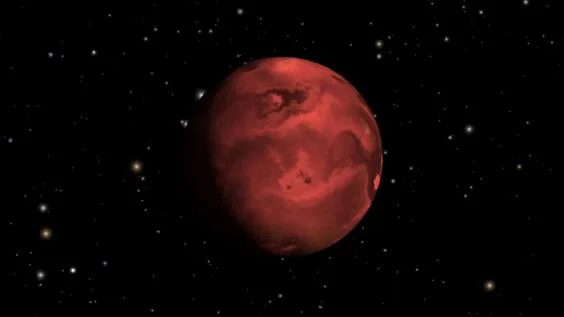
While Earth remains unique in its capacity to support life, the discovery of similar celestial bodies continues to intrigue scientists. Among them, HD 3167 b stands out as a “super-Earth”—its mass approximately four times that of our planet—engaging astronomers with its rapid orbit around a star smaller than our sun. Remarkably, a recent study published in The Astrophysical Journal Letters confirms that this volcanic world not only exists but also boasts an atmosphere.
The Importance of Atmospheres in the Search for Life
Atmospheres typically play a key role in determining a planet's potential for harboring water, which is fundamental for life. Water is often regarded as the vital ingredient for life as we know it. Without it, the possibility of life is significantly diminished. Contrary to many rocky, Earth-like planets that lack this protective layer, lava worlds such as HD 3167 b have shown a surprising inclination towards maintaining atmospheres. This finding places HD 3167 b alongside four other known rocky planets with similar characteristics.
Challenges of Atmospheric Retention
Study author Edwin Kite from the University of Chicago explains, “It’s surprising that the closer a rocky planet orbits its star, the more challenging it is for it to maintain an atmosphere. Stellar winds and high-energy radiation put considerable stress on these planets.” The fact that HD 3167 b has an atmosphere despite these challenges is intriguing. Typically, one would expect planets in such extreme conditions to lose their atmospheres quickly. Yet, they exhibit resilience, providing valuable insights into the fundamental processes that could apply to other rocky worlds. This raises questions about what conditions foster this atmospheric survival, potentially illuminating the interplay between a planet's characteristics and cosmic forces.
Exploring the Atmospheric Composition
Evidence supporting the existence of HD 3167 b’s atmosphere came from infrared observations made by the James Webb Space Telescope. This advanced instrument marks a significant leap in our observational capabilities, allowing us to gather data that was previously unattainable. When the planet transited behind its star, researchers noted it was significantly cooler than expected. This discrepancy could indicate that heat is being redistributed from the molten, star-facing side to its cooler night side due to the insulating properties of atmospheric gases. In addition, the possible presence of cloud cover might contribute to this phenomenon by reflecting light and heat, a detail that often gets overlooked but could be critical for understanding planetary climates.
So, what makes up this atmosphere? Kite suggests that HD 3167 b could be rich in silicates, resembling the mineral composition of Earth’s mantle. These findings challenge previous assumptions where scientists believed that atmospheres on these ultra-hot planets would largely consist of vaporized rock. As more studies emerge, we may find that they contain heavier gases such as carbon dioxide, carbon monoxide, and perhaps even water. The existence of water vapor is particularly suggestive; if confirmed, it would tantalizingly bring HD 3167 b closer to the criteria that define potentially habitable worlds.
Implications for Exoplanet Research
Understanding the atmospheric dynamics of a relatively cooler planet like HD 3167 b could provide critical insights into a possible threshold temperature that allows silicate-rich planets to develop dense atmospheres. This research not only enriches our understanding of exoplanets but also expands the catalog of rocky planets possessing atmospheres, which could eventually lead to a better comprehension of how different environments might foster life. If you’re working in this space, you’d recognize the significance of these findings: they broaden the criteria we use to identify potentially habitable worlds.
As we continue navigating the complexities of these distant worlds, HD 3167 b exemplifies the diverse atmospheric conditions that exist within our galaxy. It reinforces the idea that the search for habitable conditions may yield unexpected findings. The implications extend beyond the realm of academic curiosity; they could potentially reshape our knowledge of life's origins and development. The ongoing exploration of exoplanets is likely to uncover more surprises, forcing us to rethink existing paradigms about where life could potentially exist.
Lead Image: NASA


Discussion
Sign in to join the discussion.