Sørensen reshaped sociology’s study of opportunity, education and inequality, while mentoring generations of scholars at Harvard and beyond.
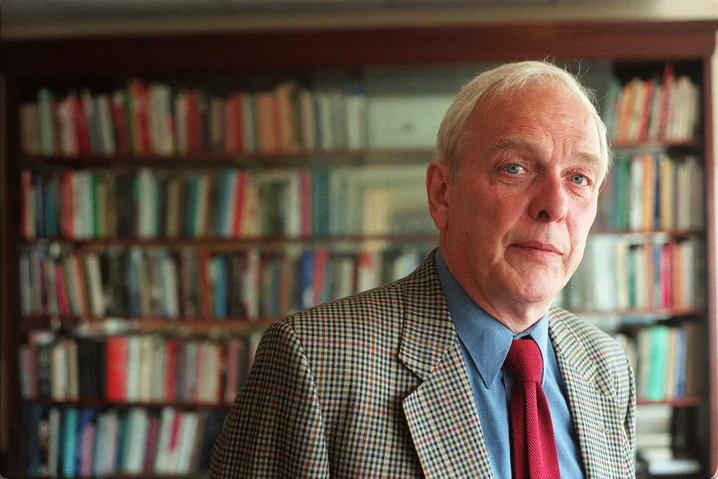
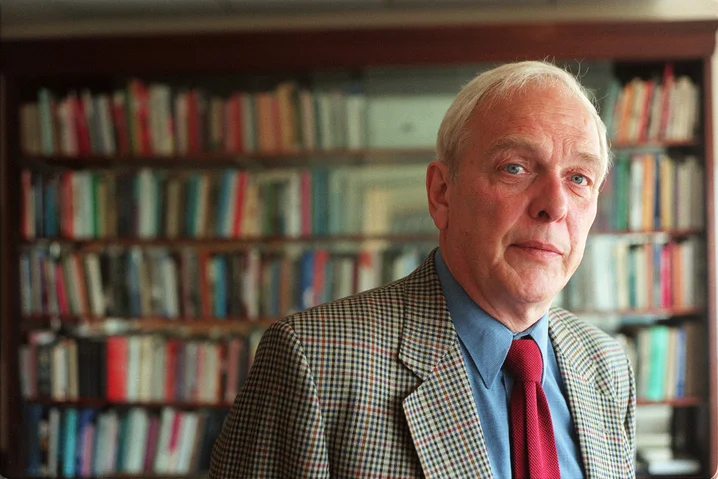
Aage Bøttger Sørensen
Kris Snibbe/Harvard University News Office
Aage Bøttger Sørensen’s central contribution to sociology was a way of connecting large social structures to the choices and prospects of individuals. His research examined how institutions distribute opportunities, and why differences in people’s resources alone cannot explain who gets ahead. That focus on the organization of opportunity shaped work on labor markets, education and class, and continues to inform the questions sociologists ask about inequality.
Opportunity shaped by institutions
Sørensen was born in Silkeborg, Denmark, on May 13, 1941. He died in Boston on April 18, 2001, a month before his 60th birthday. The Faculty of Arts and Sciences at Harvard recorded this tribute to his life and service on Nov. 3, 2026, recognizing a scholar whose influence had outlasted his career by decades.
After earning the University of Copenhagen’s first master’s degree in sociology, Sørensen pursued doctoral study in social relations at Johns Hopkins University. He completed his Ph.D. in 1971 under the guidance of James S. Coleman, whose work would remain an important intellectual reference point. That year, Sørensen joined the sociology faculty at the University of Wisconsin–Madison. He stayed until 1984, when he moved to Harvard and spent the rest of his career in the Faculty of Arts and Sciences.
At the center of his scholarship was inequality, particularly differences in socioeconomic standing and educational outcomes. Sørensen sought to explain those differences by examining both personal resources and the constraints built into organizations and economic systems. The approach resisted explanations that placed all the weight on individual effort or, at the other extreme, treated people as passive products of structure. His work asked how the opportunities available to people shape what they can accomplish, and how people’s actions operate within those limits.
His early research on labor markets engaged with two influential bodies of thought: sociology’s status attainment tradition and economists’ human capital theory. Sørensen developed stylized mathematical models to examine attainment within fixed sets of possible employment opportunities. The models brought the structure of the labor market into the analysis of individual outcomes. A person’s position, in this account, could not be understood apart from the available jobs and the rules that organized access to them.
In his later work, Sørensen developed a distinct account of structural constraint using the economic concept of rent. He treated rent as a benefit an asset can produce independently of the personal characteristics of its owner. From that starting point, he argued that rents could generate conflict between groups and help explain how classes form and persist. The move joined economic reasoning to sociological questions about power and social organization, giving researchers another way to study how advantages become attached to positions and institutions.
Schools as opportunity structures
Sørensen brought a related framework to education. He understood academic achievement as the joint result of the learning opportunities a school or classroom makes available and the resources a student can use to take advantage of them. That distinction sharpened the question of what schools do: outcomes depend not only on students’ individual attributes, but also on the instruction and opportunities institutions provide.
This way of thinking led to insights about school effects and ability grouping. A classroom’s organization can influence which opportunities to learn students encounter, while students’ own resources affect how they respond. Studying achievement therefore requires attention to both sides of the relationship. For Sørensen, education was not simply a setting in which individual differences played out; it was an institution that helped allocate opportunity and could reinforce or disrupt inequality.
He brought that concern into his teaching at Harvard. His undergraduate course, “Schooling and Society,” examined education’s role in distributing opportunity and reproducing inequality. For graduate students, the weekly “Ed Group” offered a place for sustained argument and intellectual exchange. It became a community whose effects followed its members into their careers, extending his influence through the scholars who had learned and debated alongside him.
Building departments and scholars
Sørensen’s academic service reflected the same interest in how institutions shape intellectual work. He chaired the sociology department at Wisconsin–Madison from 1979 to 1982. When he arrived at Harvard, he became chair of its Department of Sociology, serving through 1992. During that period, he led a renewal of the faculty and worked with colleagues on major revisions to undergraduate and graduate curricula. He also advanced career support for untenured faculty.
Later, as chair of the Subcommittee on the Degree of Doctor of Philosophy in Organizational Behavior, he worked to strengthen the program’s intellectual foundations and disciplinary coherence. These roles demanded attention to the conditions under which students and faculty could do their work. His administrative record thus echoed his research: opportunity depends in part on how institutions are designed and what support they make available.
For many colleagues and former students, mentorship was the most personal expression of that commitment. Sørensen advised an unusually large number of graduate students and expected them to meet demanding intellectual standards. He believed that serious development required honesty, discipline and the ability to face one’s own limitations. His praise was uncommon, which made it particularly meaningful when it came.
His criticism could be intense, but it came from a belief that students were capable of producing rigorous work. Sørensen did not offer reassurance for its own sake; he challenged students to think more clearly and to recognize what their arguments could and could not support. He treated rigor as a moral practice, one bound up with responsibility to ideas and to the people affected by scholarly claims. In April 2001, shortly before his death, he received the Graduate School of Arts and Sciences Excellence in Mentoring Award. The honor recognized a practice his students already knew: he was preparing independent thinkers, not simply training researchers to follow a model.
A scholar in an international community
Sørensen’s professional relationships extended across national borders. He collaborated with research institutes in Norway, Sweden and Germany, and served on the board of the Danish National Science Foundation. Those connections reflected his view that sociology benefits from comparisons across institutions and countries. Looking beyond a single national setting makes it possible to see which arrangements vary, and how those differences affect social opportunity.
His intellectual style combined a Danish reserve with dry humor, according to the memorial tribute. In his scholarship, that restraint accompanied a marked insistence on conceptual clarity and theoretical rigor. Following the tradition of Max Weber and his mentor James Coleman, he focused on mechanisms: how social structures connect to individual action, and how institutional arrangements shape the options people face.
After a devastating accident, Sørensen spent the final year of his life in rehabilitation. Students and colleagues who visited him found him still probing, questioning and engaging with ideas. His curiosity persisted even as his health declined. He died in Boston on April 18, 2001, survived by his wife of 37 years, Annemette, who died in 2024; his son, Jesper; and three grandchildren.
Sørensen’s legacy rests in both a body of theory and the people who carried his questions into their own work. His account of opportunity structures, his combination of sociological and economic frameworks, and his research on schooling gave scholars tools to examine how institutions distribute advantage. His students and colleagues extended that work across generations and countries. The lasting challenge he leaves sociology is to explain not only who has more, but how organizations create the opportunities and constraints that make those differences durable.



Discussion
Sign in to join the discussion.