NASA's Curiosity rover reveals an authentic Martian sunrise, showcasing unique geological formations and offering insights into Mars' ancient volcanic activity.
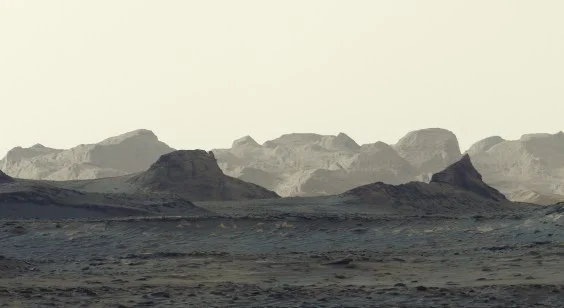
NASA's Curiosity rover has delivered yet another breathtaking view of a Martian sunrise, adding to its already impressive photographic catalog since landing on Mars in 2012. This particular image, taken by the rover's Mastcam on August 11, 2026, around 8:30 a.m. Mars time, showcases a panorama of rocky ridges known as yardangs near Mount Sharp. Such visuals are not merely stunning; they serve as a reminder of the complexity and beauty of another world, pushing the boundaries of human exploration into the far reaches of our solar system.
Technical Marvels of Martian Imaging
The Mastcam system aboard Curiosity is a feat of engineering that combines two high-resolution cameras to capture stunning scenes at a resolution of 1,600 by 1,200 pixels. It stitches together multiple images to create cohesive panoramas that evoke a sense of presence on Mars. What makes this recent photo particularly noteworthy is the decision by NASA scientists to forgo adjusting the white balance, a common practice intended to enhance features for Earth viewers. This approach resulted in an authenticity that mirrors the true Martian experience.
This choice highlights a significant philosophical stance in planetary science: the evaluation of data as it is, rather than how it would be interpreted through the lens of Earth’s atmosphere. If you're working in this space, you know that raw, unedited visuals can yield scientific insights that processed images may obscure. The resulting image doesn’t just offer aesthetic pleasure; it provides an unaltered view of Martian phenomena, opening avenues for more genuine scientific inquiry.
A Glimpse into Martian Geology
The yardangs depicted in the sunrise image are far more than just striking formations; they are significant geological structures shaped by millions of years of erosion. Located at the northwestern edge of Mount Sharp, which towers at an impressive 3.4 miles, these formations present a unique geological puzzle. The question around how they were formed opens discussions about the planet’s climatic history, processes, and past geological events.
This area is not just another spot on the Martian map; it stands as a testament to the planet's dynamic nature. Curiosity’s project scientist, Ashwin Vasavada, has pointed out that the yardang layers exhibit an unusual coloration and tilt. This could suggest a more complex geological history than previously thought. One hypothesis proposes that these layers might comprise ash deposits from ancient volcanic activity. Such insights further invite in-depth investigation, potentially reshaping our understanding of Mars’ geological timeline.
Future Exploration and Longevity
Curiosity has already surpassed previous elevation records for Martian rovers, currently operating at approximately 3,200 feet. The rover’s exploration aims to reach these enthralling ridges by 2027, where it plans to collect rock samples and enhance its imaging capabilities. This goal isn't just ambitious; it's a testament to the engineering feat that Curiosity represents.
As for how long Curiosity will remain operational, that’s an ongoing question, shrouded in uncertainty. The rover aspires to challenge the endurance record set by its predecessor, Opportunity, which famously operated for 14 years and 136 days. To claim that title, Curiosity needs to remain functional through Christmas. It's a nail-biter for scientists and space enthusiasts alike. The team continues to adjust and optimize systems, making sure that they can extend operational lifespans even further.
Implications for Mars Research
The implications of Curiosity’s findings reach far beyond its immediate mission. By capturing images and collecting data over time, Curiosity has fashioned a baseline for understanding Martian geology. This is significant, as it sets a precedent for future missions aimed at possibly human exploration. Each piece of data gleaned adds to a tapestry that informs decision-making on where and how we might colonize in the future. And yet, this is not merely about human aspirations; it’s about our understanding of extraterrestrial environments that could hold clues to life beyond Earth.
As we marvel at this stunning Martian dawn, raising anticipation for what other celestial phenomena Curiosity might capture next—a sunset, perhaps?—we must also consider the larger picture: the knowledge amassed from these explorations may one day help us understand the fundamental nature of life itself, not just on Mars, but across the galaxy.
Lead Image: NASA/JPL-Caltech/MSSS
Discussion
Sign in to join the discussion.