Anne Carson, former professor at the University of Michigan, wins the Nobel Prize in Literature, recognized for her original contributions to contemporary writing.
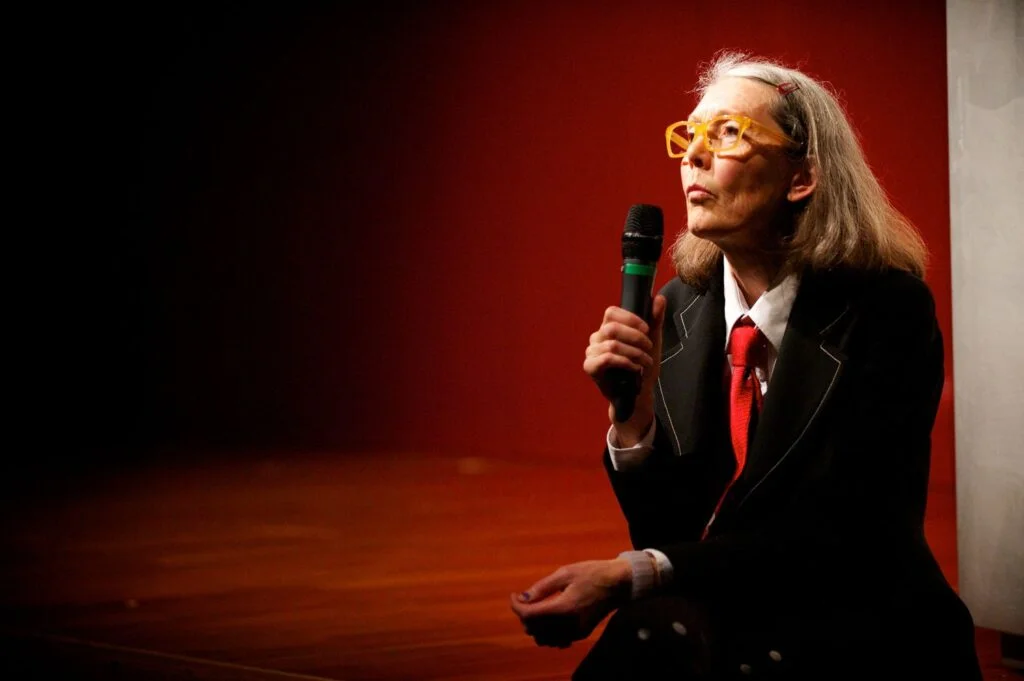
A Celebration of Literary Innovation
Anne Carson, an acclaimed former professor at the University of Michigan, has been awarded the Nobel Prize in Literature for her “bold and inventive oeuvre" that engages with classical traditions to reshape contemporary literary forms. The Nobel Prize committee highlighted her unique approach, which breathes new life into classical narratives and inspires innovative expressions in modern literature. This recognition isn’t just an accolade; it signifies a shift in how we view literary boundaries and the role of classical influences in contemporary writing.
Influence and Teaching Legacy
Carson, who taught at the University of Michigan's College of Literature, Science, and the Arts from 2003 to 2009, generated significant excitement among her students. Many found her method refreshing, as she constantly encouraged them to explore literature from fresh perspectives. Learning from an author who reinterprets traditional narratives through a modern lens was invaluable for many aspiring writers. U-M President Domenico Grasso expressed his delight over the honor, praising Carson for her impactful contributions and mentorship during her tenure at the university. This acknowledgment underscores the ripple effect of Carson’s influence on younger generations of writers.
A Distinctive Literary Voice
Steve Sem-Sandberg, a member of the Nobel Committee for Literature, praised Carson for intertwining classical characters and tales from Greek and Latin history within contemporary frameworks. He remarked on the energetic blend of antiquity and modernity in her writings, stating, “Nobody writes like her. And nobody would even, I think, dare to do this in this way.” This commendation unveils the essence of what makes Carson's writing significant. By taking age-old themes and reframing them in a modern context, she does more than just fill a literary niche; she challenges prevailing norms.
Reflecting on her newfound accolade during a conversation from Reykjavik, Iceland, Carson described the news as “a little insane.” Her reaction hints at a humble awareness of the weight of such recognition. The literary world often elevates figures to celebrity status, which can feel overwhelming for those who prefer to focus on their craft. Carson, with characteristic humility, labeled her writing process "inadvertent" and suggested that her approach is to “always try to do something else.” This honesty about her creative journey allows readers and aspiring writers to see that even the celebrated experience uncertainty.
Guiding Principles and Literary Journey
When discussing how to embark on a new book, she shared a rule that has guided her: “Start in the middle. It’s the only rule I have.” Such a principle reflects her unconventional approach toward narrative structure and storytelling. Many writers adhere to strict formulas or linear storytelling. Carson’s method inspires others to rethink their own approaches, encouraging creativity over rigidity.
Born in Toronto in 1950, Carson has navigated various genres, encompassing poetry, essays, translations, and scholarly work. She often draws from ancient Greek literature while innovating literary forms. This versatility lends her an expansive voice that resonates well across different literary circles. Her notable works include “Eros the Bittersweet” (1986), “Glass, Irony, and God” (1995), and “Autobiography of Red: A Novel in Verse” (1998), alongside more recent titles like “Float” (2016) and “Wrong Norma” (2024). Carson’s ability to pivot between genre and style keeps her work relevant and appeals to diverse audiences. (And this is the part most people overlook.) It’s not just the content of her works, but the breadth of her capabilities that sets her apart.
Moreover, Carson has translated several classical Greek texts, breathing new life into Sappho’s fragments in “If Not, Winter” (2002) and translating Sophocles’ “Electra” and “Antigone” in 2001 and 2015 respectively. These translations aren't mere renditions; they reflect her unique perspective, bridging the gap between ancient and contemporary expression.
Challenging Literary Norms
The Nobel committee emphasized how Carson’s work has transcended traditional lyrical poetry, challenging the limitations of the narrative self and paving the way for fresh literary forms. This is more significant than it looks. Modern literature often grapples with self-representation and identity, and Carson’s approach enriches this discourse. Her work forces readers to confront not just the traditional narratives they've encountered, but also their own assumptions about what literature can be.
Her accolades include the 1998 Guggenheim Fellowship and the 2000 MacArthur Fellowship, which further cement her reputation in the literary community. These honors validate her work and speak to her influence within academia and beyond. They set a benchmark for emerging writers and serve as milestones in Carson’s ongoing journey.
The Road Ahead
With this Nobel Prize, Carson ascends to a prestigious circle of literary figures, receiving international acclaim for a body of work that consistently challenges and expands the boundaries of poetry and literature. The implications of her recognition extend beyond personal achievement; they signify a wider acceptance of diverse literary forms that break from convention. This recognition invites not only admiration but also scrutiny of traditional literary structures.
If you're working in this space, Carson’s journey illustrates the value of pushing boundaries. The future of literature may involve even further exploration into the realms of history and modernity. Fewer rules could mean more originality. Carson's work will likely inspire a new generation of writers who feel empowered to innovate and reimagine their literary paths.


Discussion
Sign in to join the discussion.