A new temperature analysis rules out buried ice as the cause of 1998 KY26’s erratic acceleration. Hayabusa2 is set to reach the fast-spinning object in 2031.
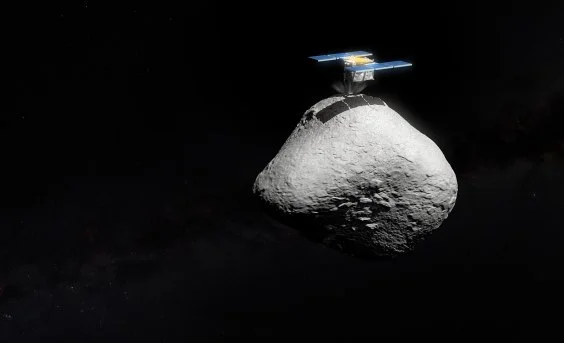
1998 KY26 is small, spins once every 5.35 minutes and accelerates in ways that don’t fit a simple picture of an ordinary asteroid. A new temperature analysis narrows one possible explanation: the object’s surface is too warm for water ice to remain buried beneath it over long periods. That finding removes a plausible source of comet-like thrust, but it doesn’t identify what’s producing the asteroid’s unusual motion.
A dark comet theory loses ground
Some asteroids may hold ice below their surfaces. As sunlight warms that material, gas can escape through cracks or porous ground and exert a small force on the object. The process can resemble a comet’s activity without creating an obvious tail, which makes it one possible explanation for an object that changes its motion in unexpected ways.
But a study by aerospace engineers at the Georgia Institute of Technology, published in Icarus, estimates that water would escape from 1998 KY26 too quickly for buried ice to survive. The researchers concluded that any hidden ice the asteroid may once have held would have been depleted long ago. Their result turns on the object’s thermal conditions: if the surface and near-surface material are warm enough for ice to escape over time, a reservoir capable of driving its present-day motion becomes difficult to sustain.
That’s a meaningful constraint, though it isn’t a complete account of the asteroid. A temperature estimate can weaken one mechanism without establishing what force is acting instead, and the available finding doesn’t settle every uncertainty in the object’s physical makeup. This is more significant than it looks: eliminating a familiar explanation helps narrow the question, even when it doesn’t supply the answer.
An unusual motion, and a more unusual proposal
The finding challenges the “dark comet” explanation, but it doesn’t solve the larger puzzle of 1998 KY26’s acceleration. The asteroid appears to lurch perpendicular to its orbit, behavior that has prompted more unusual speculation. Harvard astrophysicist Avi Loeb and colleagues proposed that 1998 KY26 could instead be the derelict Soviet probe Phobos 1. Their paper has not been peer reviewed.
The distinction matters. The dark-comet idea offers a natural mechanism: escaping gas can nudge a small body, even if the activity is hard to see. The Phobos 1 proposal is a different kind of claim, based on the possibility that the object is human-made rather than a natural asteroid. At this stage, the source describes it as a proposal in a paper that hasn’t undergone peer review; it should be treated accordingly, rather than as an established identification.
Here's the thing: an unexplained acceleration can invite striking explanations, but the motion itself doesn’t identify its cause. To distinguish among possibilities, researchers need observations that reveal more about the object’s size, shape, surface and composition. A close spacecraft visit could provide evidence that remote measurements can’t, though even a flyby or rendezvous would have to be interpreted alongside the existing data.
A close look is on the way
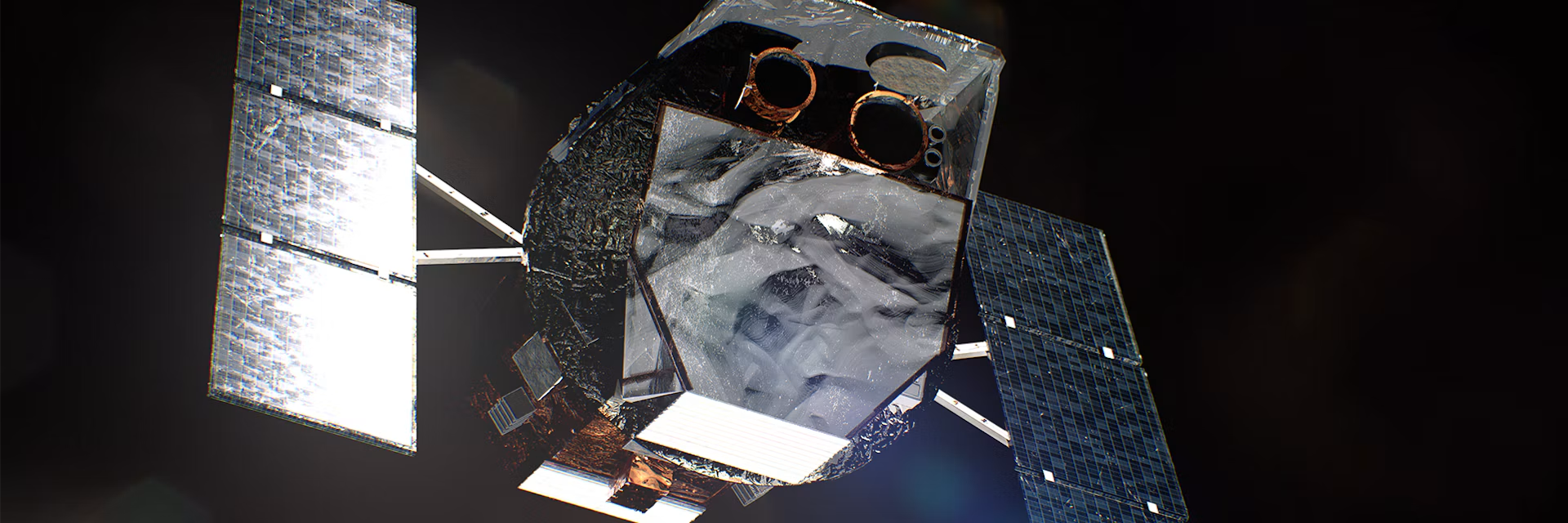
Hayabusa2 may help settle questions about the object firsthand. Japan launched the spacecraft in 2014, and it spent about a year and a half surveying Ryugu in 2018 before returning a sample canister to Earth. The material contained organic compounds dating to the early solar system. That mission gives Hayabusa2 a record of studying a small solar-system body at close range, but Ryugu and 1998 KY26 aren’t interchangeable targets: the latter is far smaller and spins exceptionally quickly.
The mission has since been extended. Hayabusa2 is expected to reach 1998 KY26 in July 2031, giving scientists a chance to examine an object roughly one-hundredth Ryugu’s diameter and only a little larger than the spacecraft itself. Those proportions make the encounter especially demanding to interpret. At such a small scale, the spacecraft would be studying a target whose dimensions are close to its own, and the rapid rotation adds another condition for observations to account for.
If you're working in this space, the value of the rendezvous is less about confirming a dramatic theory in one stroke and more about collecting direct evidence that can test competing explanations. Surface features, material properties and the object’s physical form could help researchers judge whether a natural body fits the observations. A spacecraft encounter won’t automatically explain every measured change in motion, but it could make the debate less dependent on inference from afar.
What the temperature result leaves open
For now, the temperature study rules out one explanation for 1998 KY26’s behavior while leaving the cause open. That’s a useful but limited result: the dark-comet mechanism loses support because long-lived buried water ice appears unlikely, while the observed acceleration still needs an explanation. The spacecraft visit could turn that uncertainty into a much more specific account of what this fast-spinning object is—and why it moves the way it does. Until then, the central question remains unresolved. A constraint, not a verdict.
And yet, the case is a reminder that small bodies can resist easy classification. The same object can invite ordinary physical explanations and far more speculative ones when its motion doesn’t match expectations. Hayabusa2’s planned rendezvous is the clearest route described here toward replacing those competing ideas with observations from close range (and this is the part most people overlook: better data may narrow the possibilities without making the answer immediate). 

Discussion
Sign in to join the discussion.