In his address at Harvard, President Alan Garber emphasized the paramount role of human values and intelligence in navigating the age of AI technologies.
Prioritizing Human Intelligence
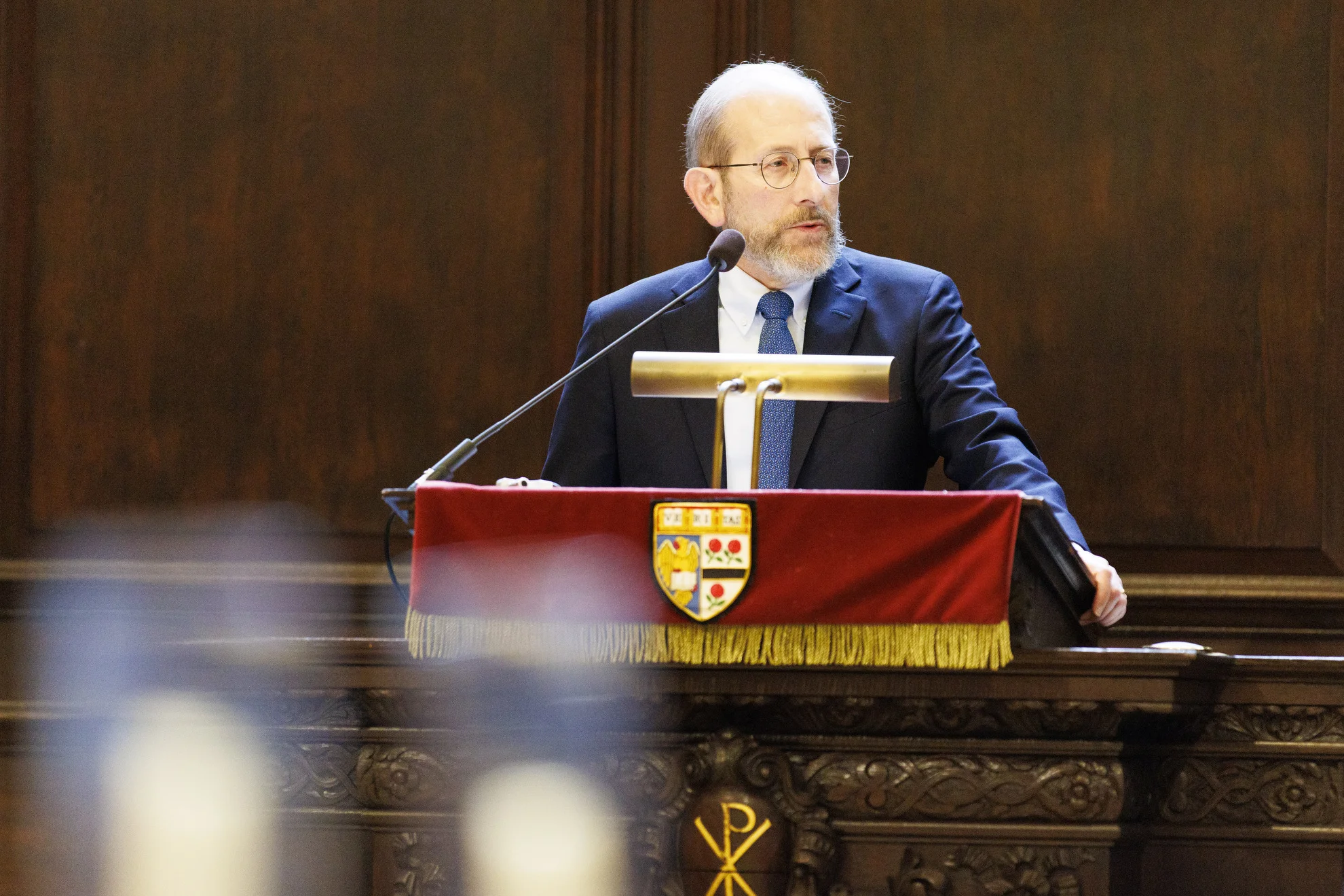
As artificial intelligence continues to reshape various disciplines, Harvard University’s President Alan Garber recently sent a thought-provoking message to faculty and students. He emphasized the value of prioritizing human intelligence and ethical values over technology. This was articulated during the inaugural Morning Prayers ceremony for the academic year, a moment meant to inspire reflection about the university’s core mission, especially with a new cohort of students eager to make their mark.
“This is a week of beginnings,” Garber stated at Memorial Church’s Appleton Chapel. He reflected on the collective responsibility to harness technology for the greater good, entreating the audience to think beyond immediate academic goals. “It offers a moment to pause and consider the broader significance of our work here, propelled by human reasoning,” he added, urging attendees to cultivate a sense of accountability in their academic pursuits. The call to action wasn’t simply about technological advancements; rather, it was a reminder that tools should align with ethical frameworks.
Addressing Global Challenges
Garber highlighted that the essence of Harvard is not merely about academic achievement; it’s about engaging with fundamental global challenges that require a multidisciplinary approach. “What does this mean?” he queried, positioning it as an imperative question. His discussion touched on pressing issues such as climate change, cancer research, and neurological diseases. Tackling these problems, he noted, demands collaborative efforts across various fields, emphasizing that solutions often arise where disciplines intersect.
Human inquiries into biology, physics, and the arts should not only be intellectual exercises but also pathways to addressing profound human experiences like grief, joy, and love. By framing such inquiries in this context, Garber invites a deeper understanding of how academia can serve humanity, moving beyond traditional educational metrics.
The Role of AI in Research
When discussing the transformative potential of artificial intelligence, Garber was keen to point out the rapid advancements in research capacity. He illustrated this with an example of a faculty member who harnessed AI to accomplish what would typically take a decade in just six months. This is more significant than it looks—accelerated research could potentially lead to swifter solutions for critical issues, but the means by which we reach those solutions matter too.
“I’m convinced that advances in knowledge—essential to human progress—will soon be made more rapidly than at any other time in human existence,” he asserted, underlining both urgency and optimism. But, there’s a cautionary note embedded in this excitement. If you're working in this space, you'll know that rapid advancement should not come at the cost of ethical reflection. What does this all mean for the integrity of academic research?
“When I think about the new age now unfolding, I tend to focus on the costs, risks, and benefits of the changes to come, and what they mean for our mission and our community,” Garber stated. “But perhaps, as we continue to ponder challenges and possibilities, we should give ourselves greater license to imagine the future that we hope to inhabit.”
Compassion and Humility in Research
While excitement around technological breakthroughs stirs the academic community, Garber stressed that these pursuits must be underscored by compassion and humility. This perspective challenges the typical narrative of unbridled technological pursuit without regard for its implications. He reflected on the joy found in the academic work itself and the goodwill that emerges from shared human efforts, reminding us that research isn’t merely about results; it’s about the people and the ethical choices we make along the way.
The Significance of Human Intellect
Garber also connected his reflections to Jewish teachings, positing that human intellect is irreplaceable and deserves celebration. The idea of being created “in His image,” as captured in Genesis, reinforces the unique sanctity of human life. This sentiment pushes back against a mechanistic view of intelligence that could result from the rise of AI. He quoted Rabbi Akiva, stating that true intelligence is rooted in self-awareness and an understanding of one’s own divine creation. It’s a compelling take—a reminder that intelligence is not just quantifiable achievement but a deeper, almost spiritual undertaking.
Looking Ahead: Ethical Responsibilities
In closing, Garber highlighted that Harvard's ethos revolves around a commitment to learning that extends beyond academic accolades. “Learning is at the heart of what makes us human,” he stated, framing it as a lifelong journey. The implication here is significant: Preserving the sanctity of learning isn’t simply a means to achieve greatness; it’s a celebration of human life itself. To some extent, each academic endeavor ought to reflect this commitment.
“Our University is, at its heart, an affirmation of humanity, an acknowledgment of our profound capabilities and the responsibility that comes with them,” Garber asserted, reinforcing a vision that ties academic pursuits to moral and ethical accountability. The future of academia, particularly in an age defined by AI, lies in this delicate balance between technological advancement and the values that underpin human experience.


Discussion
Sign in to join the discussion.