Exploring Quantum Cellular Automata and the Goldilocks Rule in Quantum Physics
Published Aug 10, 2026Reads 483By Logan Hillberry
Discover how the Goldilocks rule in quantum cellular automata leads to complex patterns and insights bridging quantum and classical systems.
A Journey Through Quantum Experimentation and Theory
In the world of cutting-edge research, the fusion of experimental and theoretical physics often leads to groundbreaking insights. I have the privilege of working as an experimentalist focused on laser-cooling molecules, yet my roots in theoretical physics remain integral to my approach. My journey began in Lincoln Carr’s research group at the Colorado School of Mines in Golden, Colorado, where I honed my skills in simulations and the intricacies of complex systems. Since that time, I’ve navigated two distinct academic paths—working on an unrelated PhD and currently undertaking a postdoc—while still engaging in theoretical pursuits alongside collaborators, including renowned researcher Nicole Yunger Halpern. Together, we transformed a complex quantum circuit into something surprisingly comprehensible after six years of persistent effort across four countries. It's a testament to the idea that, with the right perspective, intricate dynamics can yield profound understanding.
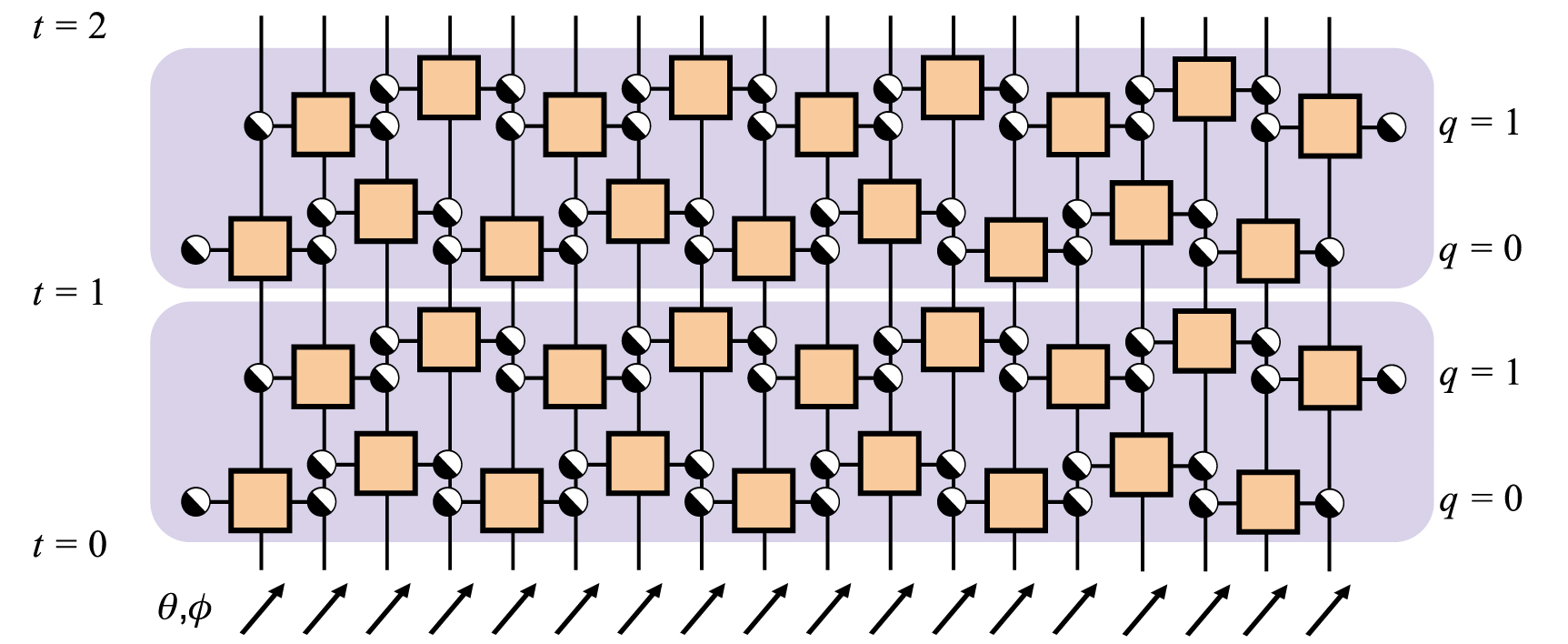
What has seized my attention recently are the developments surrounding quantum cellular automata. In a prior discussion, I introduced the concept of these machines, constructed from one-dimensional qubit strings. Each qubit’s state transitions are linked to its nearest neighbors through a set of defined rules, fundamentally altering its properties based on its immediate environment. The most fascinating aspect is encapsulated in our dubbed "Goldilocks" rule: a qubit switches state if it has one neighbor in a state of 0 and another in a state of 1—a scenario we call activity; conversely, an inactivity emerges when both neighbors hold the same value.
Illustration from our recent paper highlighting the Goldilocks QCA brickwork circuit. The orange units indicate unitary gates, while the dual-colored spheres represent the neighborhood constraints that help distinguish chaotic dynamics from free fermion behaviors.
Upon employing successive brickwork layer sequences of this Goldilocks rule, we discovered something intriguing: this careful balance between activity and inactivity generates unexpectedly intricate patterns of quantum correlation. Such patterned structures are not merely artifacts of quantum mechanics; they mirror established phenomena found in complex classical systems like metabolic networks and social interactions. Remarkably, these patterns sustained their complexity even after numerous iterations—quite the contrast to other cellular automata that typically trend toward uniformity.
The essence of our findings is detailed in our recent paper, titled *Integrability of Goldilocks quantum cellular automata*. Here, we explore why this delicate equilibrium results in such resilient structures. Some configurations of our Goldilocks QCA can be mapped to free fermions, an archetypal example of tractable quantum dynamics. What’s noteworthy is that this link uncovers how conservation laws underpin these persistent complex patterns. Our investigation necessitated collaboration among a diverse group of experts, each contributing knowledge and insights to piece together this puzzle of quantum behavior.
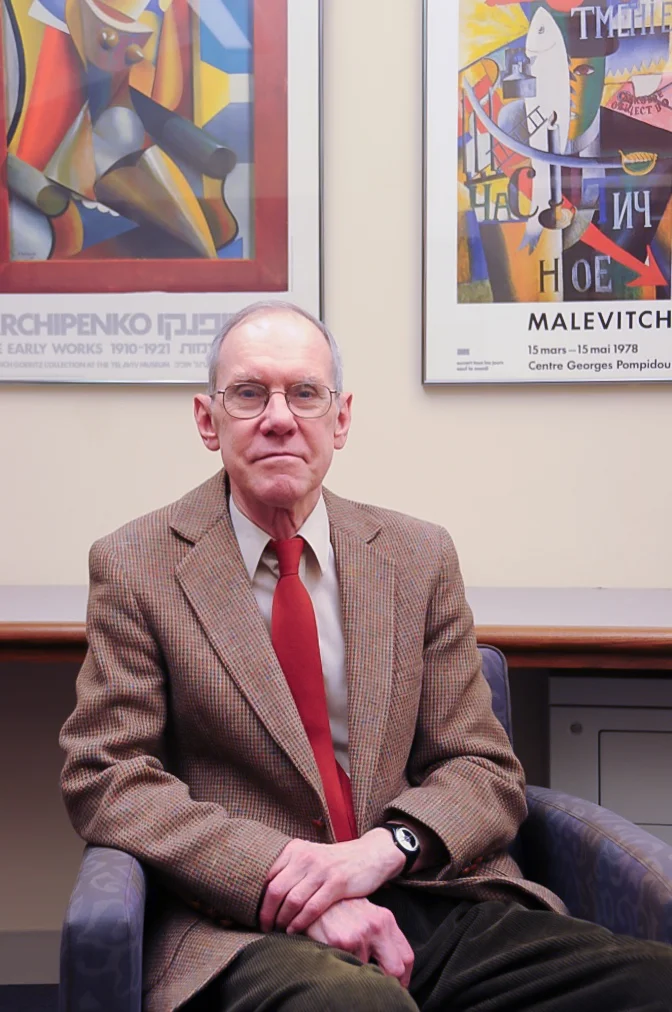
A pivotal moment in this endeavor came via a video call in May 2020 with Norman Margolus, a visionary at MIT who pioneered cellular automata for modeling real-world phenomena. His work in the 1980s involved developing a specialized chip designed for these simulations, showcasing astounding capabilities within the computational limitations of the time. Our discussions illuminated parallel concepts, particularly regarding conservation laws as fundamental to effective modeling in physics.
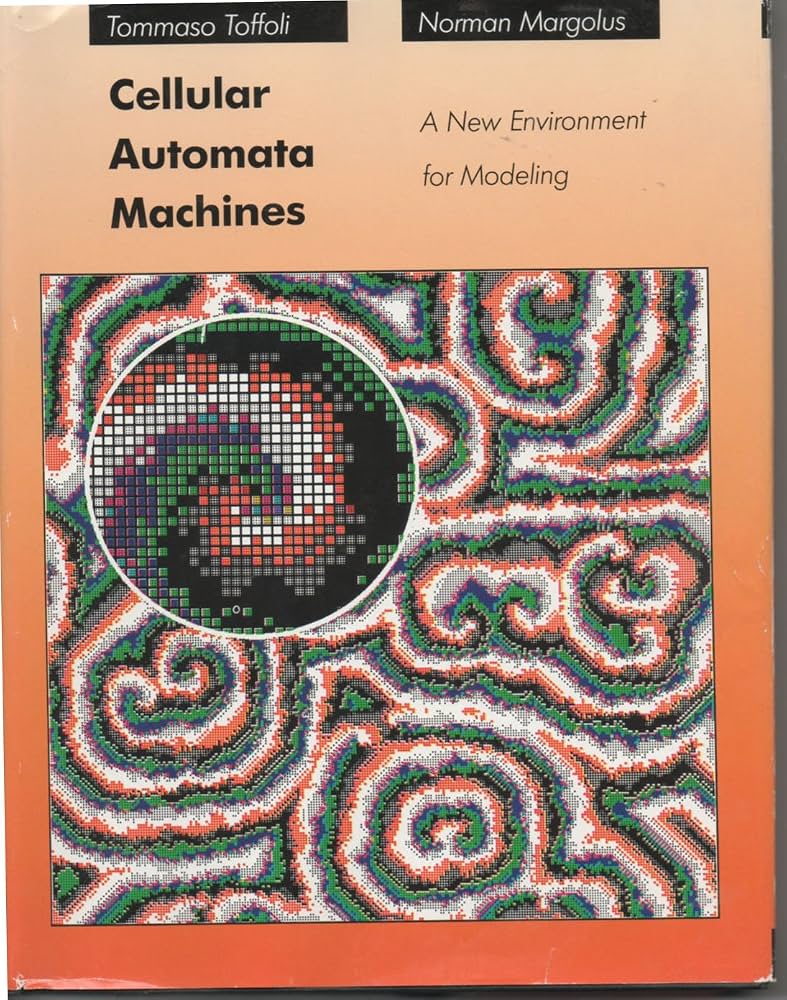
Norman Margolus's book on cellular automata, showcasing his foundational contributions to the field.
His stories about simulating fluid dynamics through simplistic local rules in cellular automata particularly resonated with me. They conjured the idea that perhaps a similar kind of conservation principle is at play within our Goldilocks QCA. Could these principles not only explain observed phenomena but also enhance simulation methods? If so, could they lead us to an exact solution of the system’s dynamics — a feature that would classify it as an integrable system?
Integrable systems conserve specific quantities, enabling precise predictions of their future states based solely on those conserved laws and their initial conditions. The classic example is the two-body gravitational orbit, where initial parameters dictate the trajectory of celestial bodies. This predictability stands in stark contrast to chaotic systems, which only partially conserve energy and require iterative methods for future state approximations.
As my exploration advanced, discussions with Nicole led us to Lorenzo Piroli, a burgeoning expert in quantum dynamics, who helped anchor our research effort. He rapidly provided useful feedback and insights, engaging deeply with our inquiry into the unusual dynamics of Goldilocks QCA. In turn, this collaboration blossomed as we delved into the depths of conservation laws and their implications for our findings, culminating in a research path driven by rigorous scientific curiosity and teamwork.
Teamwork in Research: A Journey Through Collaboration
Reflecting on the past six years, it’s clear that collaboration has been at the heart of our research effort. Each team member contributed distinct skills, making our collective progress possible. With Lincoln steering our project, I worked on the QCA models, while Lorenzo uncovered the Jordan-Wigner transformation. Tomaž’s discovery of integrability signals was a pivotal moment, and Nicole’s insights into quantum thermodynamics were vital in understanding the implications of noncommuting charges. Eric connected disparate concepts and played an important role in framing our narrative. The iterative process of drafting and refining our paper required us to blend scientific insights with analytical rigor and numerical validation.
Simulating the Goldilocks QCA
The implications of our findings on the Goldilocks QCA, which maps to free fermions, are profound. This characteristic allows us to run complex classical simulations efficiently—I've executed simulations of 256 qubits directly on my laptop. This achievement was particularly satisfying; years prior, I had only worked with a fraction of that, often constrained by the limitations of existing platforms, such as Google’s Sycamore hardware with just 23 qubits. Interestingly, while many Goldilocks QCA configurations lean towards chaos, making them challenging for classical simulation, our discovery provides a flexible model for experimentalists. They can adjust parameters to reveal integrable dynamics or explore chaotic regimes that might lead to showcasing quantum advantage.
The Value of Mentorship and Growth
As I sifted through years of emails, the timeline of this endeavor became even more vivid. The extensive correspondence—not just about the paper but also about logistics—revealed a rich history of mentorship and support. Nicole’s investment in my growth, despite never meeting in person, is remarkable. These collaborative experiences have been common among my colleagues, reminding me of the generosity found in academia.
The dedication shown by every member of this team exemplifies the essence of collaborative research. I am eager to pay forward the same support and guidance I've received as I forge ahead in experimental physics. Keeping my theoretical physics license active may even be in order as I continue this journey.
Conclusion: A Model for Future Research
The collaborative spirit and deep insights gained throughout this process lay the groundwork for future projects in our field. This isn’t just a moment of personal growth for me; it’s a call to action for researchers everywhere. With our findings, we are now equipped to inspire a new wave of experimentation and innovation. Everyone involved has set a standard for what robust collaboration looks like, showcasing that sharing knowledge and insights is integral to unlocking the mysteries of our universe.

Discussion
Sign in to join the discussion.