In Florence, physicists connect, collaborate, and discover, shaping theories and advancing concepts in the heart of Italy's rich scientific heritage.

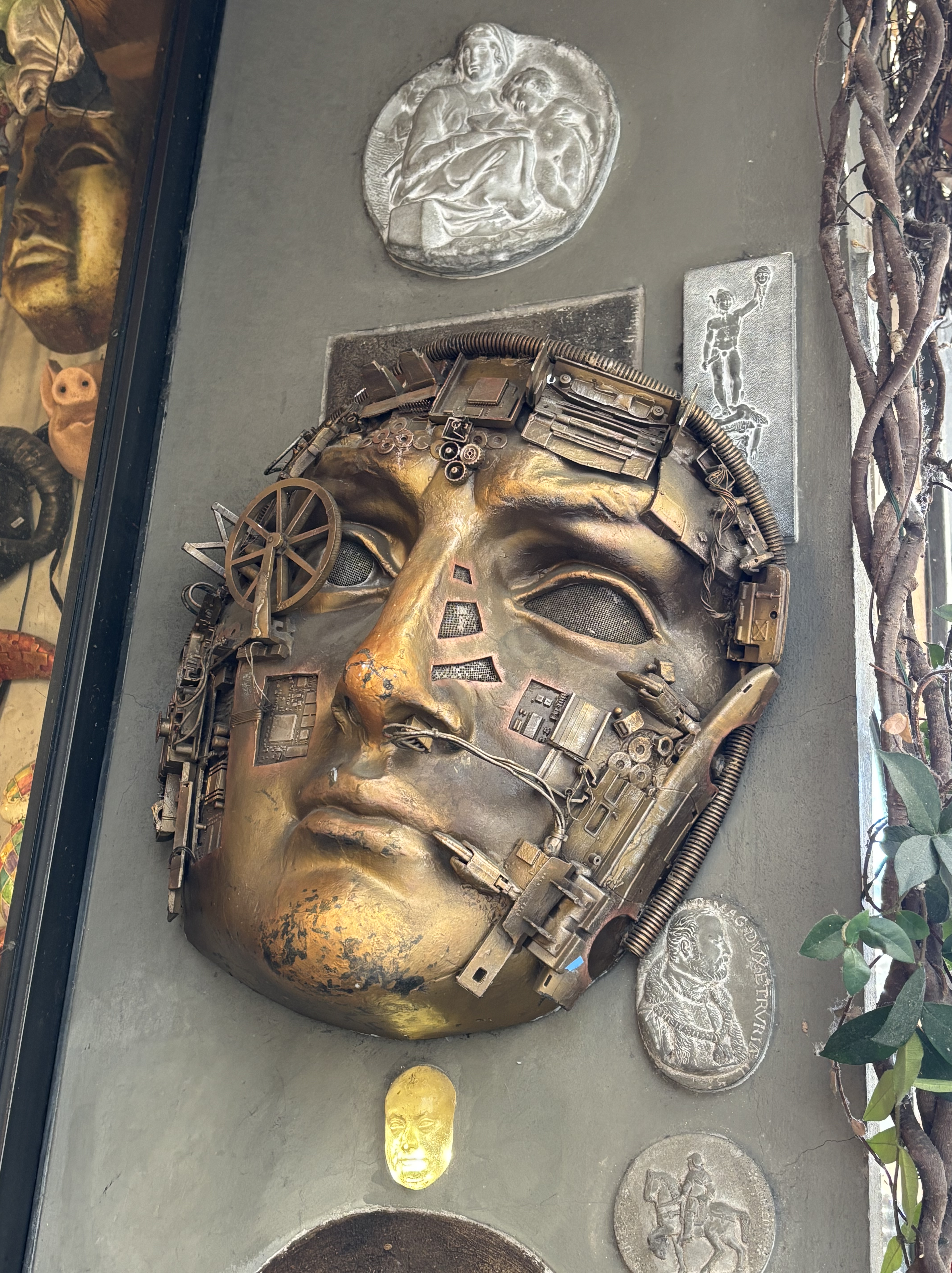
In Florence, the intersection of physics and camaraderie becomes apparent in every corner, where professionals engage in impromptu discussions even amidst cultural landmarks. This city, renowned for its historical significance and cultural heritage, sets a backdrop that inspires creativity and collaboration. It's a place where ideas flow as freely as the Arno River, and the deep-rooted traditions of exploration and ingenuity resonate with the current community of scientists.
Unexpected Connections Amidst History
During a recent trip to this historic city, I encountered fellow physicists while exploring sites like the Uffizi Gallery. Moments like these reflect a unique collaboration spirit that thrives in this Renaissance city. You might find physicists engrossed in technical discussions about quantum systems while standing beneath masterpieces of renowned artists; it's a testament to how the past informs modern scientific discourse.
Florence is more than just a city of art; it's a crucible for scientific ideas. The intersection of culture and intellect makes it a magnet for professionals. Opportunities for networking abound in every piazza and café, especially when you consider that many in attendance often share similar research interests or find themselves on the same academic trajectory. The city’s ambiance reminds attendees that the discussions taking place are as much a continuation of the academic legacy as they are a response to contemporary scientific questions.
Remarkable Encounters
Outside the gallery, I ran into another colleague. Some might categorize him as an engineer, yet his theoretical insights shone through in our conversation. That's the beauty of interdisciplinary collaboration; engineers often possess a unique perspective on problems that complement theoretical discussions among physicists. Such interactions can lead to breakthroughs that draw from engineering applications to solve complex physics questions.
Among the people I was eager to meet was Jae Dong Noh, a physics professor from the University of Seoul. I had anticipated this connection for over four years, as he undertook the first numerical tests related to the non-Abelian eigenstate thermalization hypothesis (NAETH)—an initiative I contributed to. The NAETH is not merely an academic curiosity; it offers profound insights into the thermalization processes of specific quantum many-particle systems, clarifying their unique time flow behaviors. This line of inquiry is essential for understanding complex quantum systems, which often defy classical intuitions.
Transformative Collaborations
Jae Dong's research modeled these unique systems and their dynamics while revealing fascinating insights regarding the relationship between incompatibility—a hallmark of quantum mechanics—and thermal properties. His work provided a refreshingly intricate perspective that aligned perfectly with our ongoing investigations. This collaboration emphasized how complementary expertise can illuminate areas that may remain shadowed when explored in isolation.
What this means for you as a reader is this: partnerships like ours aren't just about co-authoring papers; they reshape our approach to research itself. We engage in a rhythm of inquiry and analysis: I propose hypotheses or questions, and Jae Dong responds with rigorous calculations. Our discussions continually shaped our research efforts. His patience and clarity transformed complex ideas into manageable concepts, ultimately leading to a deeper understanding of our findings.

Research Outcomes and Implications
Our partnership bore fruit before we even met in person, resulting in two co-authored papers. The first elucidates how two quantum many-body systems adhere to the NAETH, while the second establishes a new symmetry relation, known as the Kubo-Martin-Schwinger (KMS) relation. This relationship is invaluable as it quantifies how these systems react under various stimuli, further enriching our understanding of quantum thermal dynamics. The work we're producing isn't just theoretical; it offers practical implications for future experiments and technologies that rely on quantum systems.
Our findings reveal that when dealing with quantum systems conserving incompatible properties, deviations from the KMS relation can occur, leading to potentially transformative interpretations of thermodynamic laws. This kind of exploration stretches the confines of current understanding and may redefine how physicists approach quantum thermodynamics. The deviation from traditional models isn't just a detail—it's a signal that there’s much more to uncover.
The Road to the StatPhys Conference
Ahead of the international statistical-physics conference, StatPhys, taking place in Florence in 2024, we focused heavily on our KMS findings. I even retreated into my hotel room during another event to finalize our proofs. This experience highlighted how essential it is to prioritize time for deep work, especially when intellectual momentum is building. The anticipation for presenting our work at the conference added a layer of excitement and urgency.
Our paper submission coincided perfectly with my arrival in Florence, marking the beginning of a highly anticipated conference. The opening ceremony, held in the stunning Palazzo Vecchio, featured notable attendees, including Nobel laureate Giorgio Parisi, who delivered a keynote address that echoed the values of curiosity and perseverance in science.

Interpersonal Connections and Future Prospects
The main sessions of the conference unfolded across two beautiful palaces, and I finally met Jae Dong in person. As we explored the implications of our research and discussed additional instances of thermodynamic phenomena related to quantum incompatibility, the excitement was palpable. It's in moments like these where theory tangibly interacts with reality, and partnerships solidify.
This collaboration hinted at additional discoveries awaiting exploration, gearing us up for future papers and discussions. That said, it isn’t just about what we’ve achieved so far—it's about the broader implications of our findings on the field of quantum physics. Such interactions with colleagues in Florence reaffirmed the value of face-to-face engagement in advancing scientific knowledge. (and this is the part most people overlook) The ability to brainstorm in person fosters an environment that nourishes ideas and encourages innovation in ways that virtual interactions sometimes cannot match.
Implications for the Future
As we stand at this intersection of culture and science, the dynamics of collaboration become ever more critical. The relationships we build today have the potential to shape the future of physics and related fields substantially. The insights gained from our research could pave the way for advancements that might revolutionize tech applications, especially as society grapples with the complexities of quantum computing and quantum communications. These are not just academic pursuits—they are the future, intricately linked to societal challenges and technological aspirations.
With each interaction and shared discovery, there's a strong indication that the collaborative spirit of Florence is not simply a historical relic, but a vital force driving contemporary scientific inquiry. Embracing this spirit may very well lead to the next significant breakthroughs in understanding and technology.
Discussion
Sign in to join the discussion.