The Fulkerson Prize 2023 celebrates exceptional papers in discrete mathematics with awards to six notable researchers for significant contributions.
Overview of the Fulkerson Prize
The Fulkerson Prize stands as a significant acknowledgment in the world of discrete mathematics. Instituted to recognize outstanding papers in the field, it is facilitated through a partnership between the Mathematical Optimization Society (MOS) and the American Mathematical Society (AMS). The prize, valued at $1,500 for each recipient, is not merely a monetary award; it symbolizes prestige and esteem within the mathematical community. Awarding it triennially during the MOS's International Symposium serves as a reminder of the evolution and impact of research in discrete mathematics, a branch that intersects computer science, operations research, and combinatorial optimization.
2023 Award Recipients
The 2023 Fulkerson Prize has recognized a diverse range of contributions to the field:
- Ben Cousins and Santosh Vempala achieved remarkable advancements in Gaussian cooling and related algorithms. Their work on volume and Gaussian volume notably reached $O^{*}(n^{3})$ complexity, demonstrating the increasing computational efficiency in this area.
- Zilin Jiang, Jonathan Tidor, Yuan Yao, Shengtong Zhang, and Yufei Zhao received accolades for their innovative research on equiangular lines at a set specific angle. This intersects with geometry and linear algebra, where their findings could have broad implications for related mathematical disciplines.
- Nathan Keller and Noam Lifshitz made significant contributions to the junta method for hypergraphs as well as addressing the Erdős–Chvátal simplex conjecture. This particular area of study is known for its complexity and relevance in theoretical computer science.
These winners exemplify the intersection of theoretical depth and practical application, a hallmark of modern mathematical research.
Historical Context
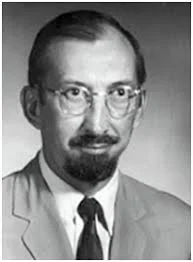
Established in memory of Delbert Ray Fulkerson (1924-1976), the Fulkerson Prize honors a mathematician whose footprint on discrete mathematics is still felt today. Fulkerson was a pivotal figure, contributing foundational theories that continue to influence current research methodologies. The path to this award started with a memorial endowment administered by the AMS, aimed at nurturing excellence that resonates with Fulkerson's legacy. Rather than simply commemorating past achievements, the prize also aims to encourage new generations of mathematicians to push the boundaries of what’s possible within the discipline.
Historical Award Winners
The lineage of Fulkerson Prize recipients reflects a history rich in critical work. Each winner has pushed the envelope in ways that not only furthered academics but also laid groundwork for practical applications:
1979
- Richard M. Karp: His pivotal classification of NP-complete problems laid the groundwork for computational complexity theory.
- Kenneth Appel and Wolfgang Haken: Their resolution of the four-color theorem was groundbreaking, employing a computer-assisted proof that sparked discussion on the role of technology in mathematics.
- Paul Seymour: His generalization of the max-flow min-cut theorem to matroids expanded the theoretical foundations that still inform optimization problems today.
1982
- D.B. Judin et al: Their contributions to the ellipsoid method for linear programming marked an important advancement in combinatorial optimization techniques.
- G. P. Egorychev and D. I. Falikman: They proved van der Waerden’s conjecture regarding matrices and their permanents, a substantial step in matrix theory.
Further Notable Winners
Since 1985, various winners have made significant contributions:
- 1994: Noteworthy recipients include Louis Billera for his exploration into piecewise-polynomial function spaces and Gil Kalai for progress on the Hirsch conjecture.
- 2006: Manindra Agrawal's groundbreaking work on the AKS primality test influenced both theoretical and practical aspects of number theory.
- 2018: Robert Morris et al. made strides in graph theory, specifically regarding chromatic thresholds, which have applications in network theory.
- 2021: Bela Csaba and colleagues solved aspects of the 1-factorization conjectures, pushing the envelope in understanding graph structures.
Ongoing Challenges in the Field
While the Fulkerson Prize effectively honors prominent achievements, it also serves to highlight ongoing challenges within discrete mathematics. Issues such as unresolved conjectures and complex algorithms continue to inspire new research avenues. Mathematicians might find themselves drawn into deep investigations spurred by these historical contributions, reconnecting with problems that have lingered for decades. The dynamic between honoring past work and inspiring new contributions is vital for the sustaining vitality of the field. This is where fresh ideas and perspectives become essential.
Congratulations are in order for this year's winners, Ben Cousins, Santosh Vempala, and their colleagues. Their impressive achievements might influence the future direction of discrete mathematics, further enriching the discipline's already significant history!
Significance and Future Outlook
The lasting impact of the Fulkerson Prize extends beyond the awards given. The encouragement of groundbreaking research that the prize embodies is itself a significant motivator for many in the field. These awards can effectively spotlight emerging research trends that could shape future innovations in mathematics.
If you're working in this space, consider this: As past winners have shown, the pursuit of new ideas often comes from grappling with unresolved questions that many have overlooked—or deemed impossible. The academic rigor involved can lead to breakthroughs that reshape our understanding and applications of mathematics.
What this means for you is clear: The Fulkerson Prize transcends mere recognition; it calls upon mathematicians to push themselves, to confront what remains unresolved, and to find inspiration in the shadows of past work.


Discussion
Sign in to join the discussion.