Researchers at the University of Washington reveal advances in planar graph representations and their applications in algorithmic optimization.
Academic Excellence and Leadership
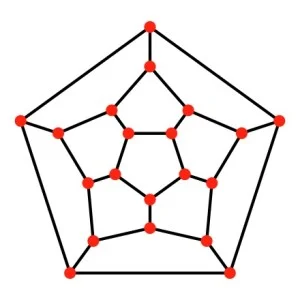
Professors Yin Tat Lee and Thomas Rothvoss from the University of Washington's Allen School are pioneering research in planar graphs, a subject that has gained new relevance in both theoretical computer science and practical applications. Lee, known for his A.W. Tucker Prize-winning doctoral thesis in optimization, holds a solid reputation for pushing the boundaries of mathematical theory into viable solutions. Meanwhile, Rothvoss, who straddles both the Allen School and Mathematics Department, enriches the field with interdisciplinary insights. Together, they guide a team of promising PhD students through complex theoretical challenges that combine deep mathematical understanding with practical problem-solving skills.
In academia, mentorship can significantly influence the trajectory of research. The collaboration between seasoned professors and enthusiastic PhD candidates often yields surprising results. Enter Sally Dong, a notable PhD candidate in this group, whose recent strides are drawing attention in algorithmic research related to circle packing representations of planar graphs. Her work isn’t just a continuation of established research; it’s carving out a new path that connects abstract mathematical concepts with computational feasibility. More about her work can be found here.
Sally’s Contribution
Computing Circle Packing Representations of Planar Graphs, co-authored by Sally Dong, Yin Tat Lee, and Kent Quanrud, explores the algorithmic side of the Circle Packing Theorem. This theorem posits that every planar graph can be represented through the tangential arrangement of a set of internally disjoint circles. While the mathematical underpinnings of this theorem are well documented, its algorithmic perspective has often been overshadowed until now. This oversight in research indicates just how much remains to explore in the intersection of geometry and computer science.
Dong's research introduces a convex optimization algorithm designed to compute a primal-dual circle packing representation for maximal planar graphs and, by extension, all planar graphs. The method boasts an expected run-time of O(nlog(R/s)), with 's' denoting the accuracy level of the representation.
This development is significant because it presents an efficient way to compute representations that were once considered more theoretical than practical. Given that planar graphs are widely used in numerous applications, like geographical mapping and network design, finding efficient algorithms is imperative. If you're working in this space, you'll recognize that improvements in computing efficiencies can lead to advances in a variety of fields, from computer graphics to operations research.
Linking Theory and Application
The relevance of the Circle Packing Theorem to foundational theorems in graph theory gives Dong’s work added significance. Graph theory plays a critical role in computer science, particularly in optimizing algorithms used in networks, routing, and even machine learning. Her research connects this theorem to the Planar Separator Theorem, developed by Lipton and Tarjan, which has implications for speeding up algorithms for constrained graphs.
The findings also provide a geometric proof of the Planar Separator Theorem, enhancing the dialogue between geometry and discrete mathematics, which is essential for advancing algorithmic design.
What this means for you is that the intersection of these fields may lead to novel approaches and frameworks that could redefine how we understand complex systems. This research embodies an exciting intersection of theory and practical application, enriching the study of planar graphs and their computational implications. It's worth considering how these theoretical advancements can impact real-world scenarios, especially where efficiency and performance are paramount.
Implications and Future Outlook
The ramifications of Dong’s work extend beyond the immediate findings. The connection she draws between established theoretical frameworks and practical algorithms opens up avenues for further research. If circle packing can be computed effectively, you might see this approach applied in fields such as data visualization, where spatial representation is key or even in neural networks that rely on geometric interpretations to process data.
In an era where computational efficiency is closely tied to technological progress, enhancing the performance of algorithms connected to planar graphs could have broader implications. As more researchers adopt these methods, the algorithms that govern major software tools, from geographic information systems to social network analysis, may be optimized significantly. (And this is the part most people overlook.)
This research promises to bring theory into sharper focus, but it also raises questions. Will the academic community embrace these changes? Will traditional methodologies give way to more computational approaches? The answers to these questions will likely shape future research directions, and the ongoing collaboration among Lee, Rothvoss, and their students is likely to be at the forefront of this transformative shift.


Discussion
Sign in to join the discussion.