Exploring Quantum Advantage: Insights from Recent Expert Discussions
Published Jan 06, 2026Reads 739By Dominik Hangleiter
Recent discussions reveal skepticism among experts about whether quantum advantage has been achieved, highlighting gaps between theory and practical belief.
Assessing Quantum Advantage: Insights from Recent Talks
Not long ago, I had the opportunity to share insights on the complex issue of quantum advantage at two notable gatherings: the annual retreat of the [CIQC](https://ciqc.berkeley.edu/) and a recent session as part of a [KITP programme](https://online.kitp.ucsb.edu/online/stablephases25/hangleiter/). I began by asking attendees—primarily experts in experimental and theoretical physics, with a few computer science theorists mixed in—whether they believed quantum advantage had already been realized. You'd think such a straightforward inquiry would yield a consensus, especially given that over five years have passed since Google's first claim to **quantum supremacy**—a term coined to describe the ability of quantum systems to outstrip conventional digital computers.
In theory, I expected my audiences to be supportive of this claim. After all, we’re well-past the initial assertions made in 2019 when the Google team showcased their capabilities. They had achieved what many viewed as a benchmark for quantum computation: solving tasks unattainable for classical computers (or so they claimed). However, I was taken aback by the results. Less than half of those surveyed agreed that we had reached quantum advantage.
This skepticism is revealing. During the discussions that followed, it became clear that many in the audience were critical not just of the experimental results, but of the very concept of quantum advantage itself. A persistent theme in the criticism was that Google’s claimed advantages were quickly deemed questionable, especially following classical simulations that could replicate certain results of their quantum experiments. The broader community, it seems, has struggled to keep pace with the advancements in both the theoretical underpinnings of quantum computing and subsequent experimental progress.
What’s significant here is the chasm between theoretical excitement and practical belief among experts. If you're working in quantum technology, this skepticism could have implications for how future advancements are communicated and perceived. The skepticism raises critical questions about the trustworthiness and the definitions we apply to concepts like quantum advantage. Many in the field seem to be waiting for a concrete demonstration—data and experiments that not only meet theoretical expectations but surpass the classical benchmarks in practical, meaningful ways.
I intend to address these concerns over the next series of posts by offering clearer insights into what quantum advantage means. I'll unpack the experimental work done to demonstrate that existing quantum computers can indeed tackle tasks that classical computers simply can’t, albeit they're often related to solving problems of limited real-world utility right now, so don't lose sleep over your bank accounts just yet.
Let's start with a primer on quantum advantage and explore the recent experiments that have aimed to validate or disprove it.
Final Thoughts on Quantum Advantage
The claims surrounding quantum advantage are layered, relying on complex measurements that might feel more like shadows than clear metrics. While there's merit to asserting that these claims hold some weight, the methodology warrants scrutiny. As I’ll explore in my upcoming piece, the scientific process often embraces uncertainty—sometimes it's about navigating through unclear data points to find significance.
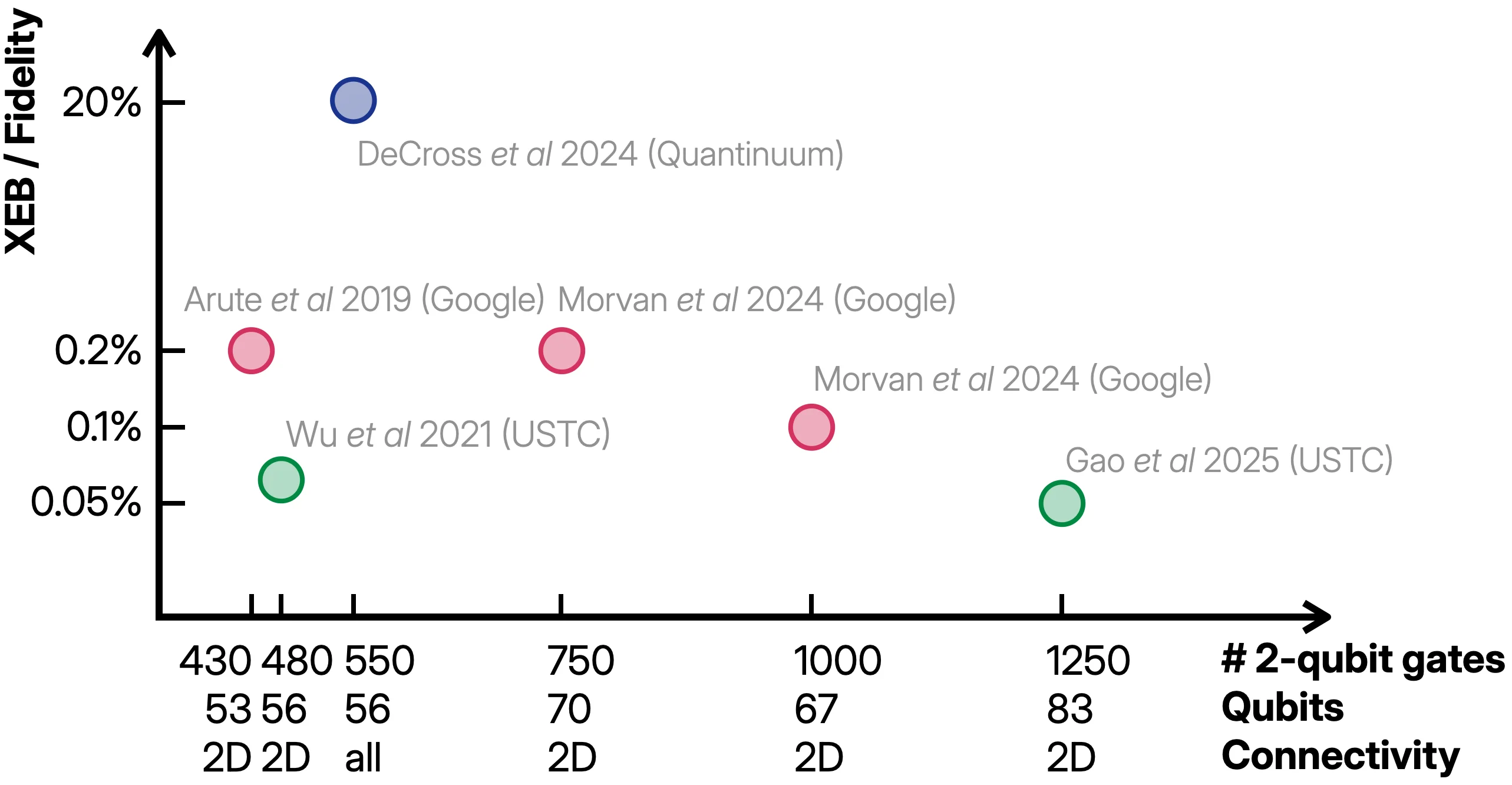
Looking specifically at the quantum supremacy experiments, I zoomed in on random circuit sampling performed on programmable digital quantum computers. This approach, although limited in itself, offers a purer conceptual ground compared to methods like boson sampling or Gaussian boson sampling, which predominantly leverage photonic devices. The latter could easily resemble analog simulation techniques, making them less versatile as true quantum computation tools.
As we move ahead in this intricate field, I want to hear your thoughts. Do you believe these recent experiments have indeed demonstrated quantum advantage? If you’re skeptical, what are your reservations? Your feedback could shape the ongoing dialogue.
For those intrigued by the details and looking for deeper insights, I urge you to check out the next part of this discussion, where we'll dissect the evidence surrounding quantum advantage more thoroughly. This ongoing exploration is vital to shaping our understanding of what’s achievable in quantum computing.
Continue readingPart 2: Considering the evidence.
In closing, the journey through quantum computing is complex, rife with both promise and skepticism. Embracing these challenges will ultimately elevate our grasp of this transformative technology.



Discussion
Sign in to join the discussion.