Isaac Witte, a Ph.D. candidate at Harvard, reflects on his journey of scientific curiosity and the incremental advances in CRISPR technology.
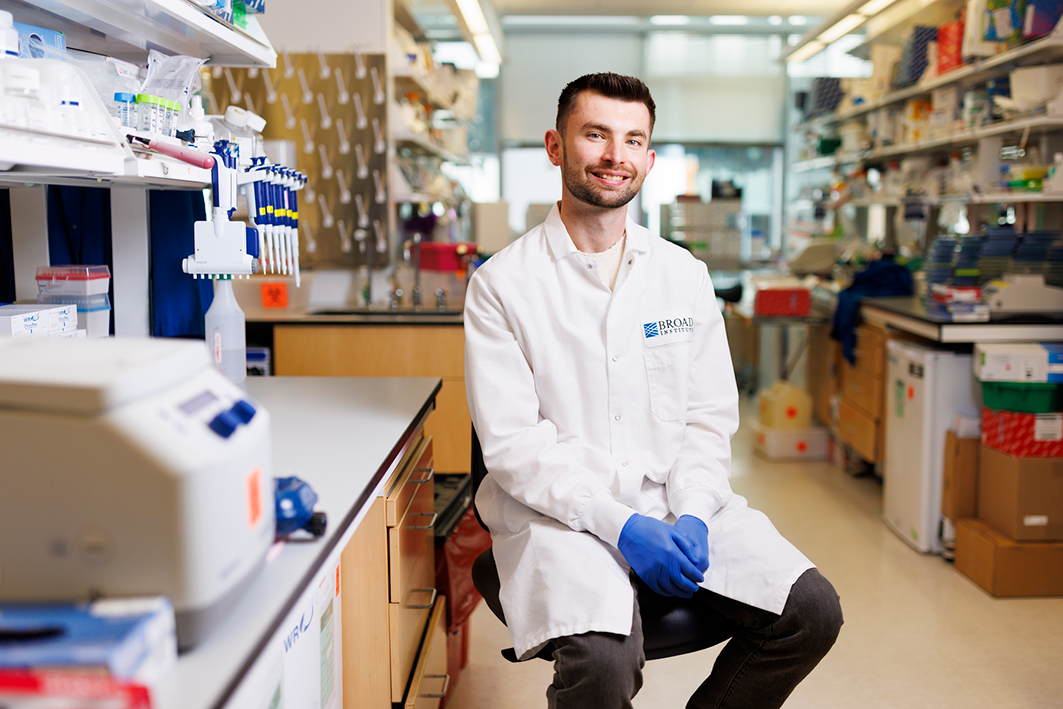
Isaac Witte, a Ph.D. candidate at Harvard Griffin GSAS, has turned his high school fascination with DNA replication into a significant scientific pursuit. Growing up in Overland Park, Kansas, he was captivated by the orchestration of proteins and molecules that make life possible, pondering how evolution could yield such complexity. This sense of curiosity laid the groundwork for his later achievements in the field of gene editing.
Witte's pivotal moment came during his undergraduate tenure at the University of California, Berkeley. Interested in the intricacies behind RNA interference, he engaged in a research fellowship at the Stowers Institute for Medical Research, where he explored gene depletion in flatworms. His investigations illuminated how manipulating genetic pathways could lead to remarkable physical changes, like the development of multiple heads or tails.
Returning to school, Witte worked closely with Jennifer Doudna while she was still rising to acclaim for her groundbreaking discoveries in CRISPR technology. While many were focused on the applications of the gene-editing tool for human health, Witte’s interest leaned toward understanding the underlying mechanisms of CRISPR systems, especially beyond the widely known Cas9 variant. He recognized the incredible variety among CRISPR systems, each evolved by bacteria to fend off invasive genetic entities.
Among Witte's notable achievements during his undergraduate research was the development of a small CRISPR system capable of binding to DNA and indiscriminately cutting other DNA sections. This work had implications for diagnostics, potentially helping to reveal the presence of specific genetic markers. His evolving understanding of CRISPR led him to contribute to a startup formed by former lab members of Doudna's team, where he set out to enhance the technology’s pathogen detection capabilities.
Transitioning to Harvard, Witte shifted his focus toward phage-assisted continuous evolution (PACE), a system innovated by his advisor David Liu. This technique drastically accelerates the evolution of biomolecules, which Witte believed could address a longstanding issue in gene editing. He examined a newly discovered CRISPR mechanism that could insert new DNA without necessitating cuts to the original strand, positing that it held transformative potential for treating genetic disorders requiring multiple mutations.
However, advancing this research posed challenges, primarily because the naturally occurring CRISPR system often struggled to function effectively in human cells. Witte and his collaborators opted to employ PACE to evolve this system, seeking to enhance its activity in a way that could be translated into therapeutic applications. This stage of his Ph.D. journey involved a meticulous analysis of various protein components to identify the most effective traits to amplify.
The journey was one fraught with complexity. A collective evolution of all involved proteins proved ineffective, leading Witte to realize that boosting a specific transposase protein, TNSB, significantly enhanced the process. Through persistent efforts, his team ultimately managed to increase the system's efficiency over 100-fold within human cells.
The outcomes of this rigorous research were published in Science, highlighting the promising ability of this evolved CRISPR system to correct numerous disease-causing mutations simultaneously, eliminating the need for extensive regulatory evaluations for each specific edit.
“It really was this progress of many incremental advances that amounted to these large improvements.”
Witte emphasizes that there was no single eureka moment in his research; rather, it was a series of incremental improvements. Each evolution campaign brought with it minor advancements, sometimes increasing a protein's presence by only five- or ten-fold. “I think that was the most surprising and encouraging result,” he said, reflecting on the gradual progress of his research and its implications for the scientific community.
His advances in CRISPR technology could pave the way for treatments targeting various loss-of-function diseases, particularly those affecting the liver, an organ that's easier to target with his enhanced gene-editing techniques. Nevertheless, the translation of these innovations into practical therapies remains a few years away; current achievements have yet to be replicated in diverse bodily cell types.
As he looks forward, Witte remains committed to exploring the world of science driven by curiosity, the same driving force that initially inspired him. “The curiosity-based focus is something I’d like to do long-term as a scientist,” he remarked. His journey underscores the blend of curiosity and persistence that often leads to major advancements in the scientific field.


Discussion
Sign in to join the discussion.