Mark Wise's legacy as a brilliant physicist and engaging mentor leaves an indelible mark on Caltech and the wider scientific community.
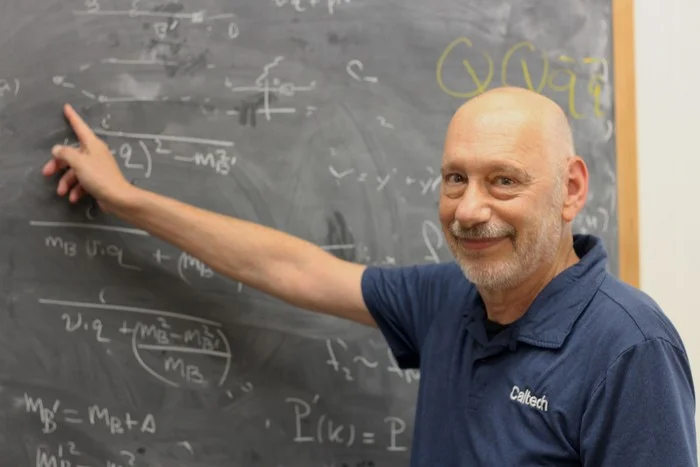
Mark Wise, the esteemed John A. McCone Professor of High Energy Physics at Caltech, passed away on July 10 at the age of 72. His impact on theoretical particle physics and the lives he touched is immeasurable, as evidenced by heartfelt tributes shared during a recent memorial service led by fellow physicist John Preskill. Wise's legacy, both as a scientist and a mentor, will likely ripple through the academic community for years to come.
A Lasting Friendship
Preskill reflected on a friendship that spanned decades, beginning when their families connected shortly after Mark and his wife Jackie moved to Harvard in 1980. Their families shared precious moments, celebrating holidays and milestones together, trying to blend their traditions while fostering lasting connections between their children. Such personal connections often serve as the bedrock of academic collaborations, enriching both personal and professional lives.
Beyond mere friendship, their bond exemplified how collaboration can thrive on mutual respect and shared experiences. In fields as intellectually demanding as physics, personal relationships often form the backbone of thriving academic environments, making their connection even more significant. The warmth of their friendship resonated during the memorial, signaling the profound sense of loss felt by those who knew him.
Mark’s Journey to Physics
Though initially indifferent toward academics in his youth, Mark's determination emerged when he decided to pursue a path in science after his ninth-grade struggles. His early aspirations of becoming a professional athlete fell by the wayside, leading him to a remarkable academic rebirth. By the time he graduated from high school, he excelled as a physics major at the University of Toronto. His journey underscores a critical truth about education: it often takes just one pivotal mentor to redirect a life path. The influence of a young professor, Nathan Isgur, would prove pivotal in shaping his academic trajectory.
Despite facing rejection from prestigious PhD programs in the U.S., Mark's resolve didn't waver. Rather than retreating into frustration, he opted to enhance his qualifications with a master's degree. This decision not only strengthened his academic footing but also prepared him for the rigorous environment at Stanford University, where he truly soared. This tale isn't just about Mark but serves as a testament to resilience in the face of adversity—a quality that will inspire many in the academic community.
An Exceptional Scientist
Mark's contributions to theoretical particle physics quickly defined his career. He achieved tenure at Caltech by the young age of 31, further elevating his stature by becoming the John A. McCone Professor while still in his 30s. His work in the field represented the culmination of years of dedication and intellect, and it earned him respect from peers. He wasn't just a physicist; he was a thinker who balanced the depth of scientific inquiry with a knack for relatability.
His awe for physics was often expressed through an endearing mix of humor and humility. A lover of action films, he frequently shared memorable quotes from Clint Eastwood, reflecting on both his limitations and strengths as a physicist. This combination of intellect and levity created a unique presence; he was both an authority and an approachable figure in the often intimidating world of particle physics.
A Passion for Teaching
Teaching was another realm where Mark flourished. His lectures were remarkable not only for their academic rigor but also for the warmth and humor he exuded. Students thrived in his presence, as his lectures became known for the playful “Wisecracks” that had a way of making complex topics more accessible. Such techniques are vital in higher education, where the pressure to perform can often stifle enthusiasm. Mark understood that learning could—and should—be enjoyable.
One of his unique teaching methods involved coin tossing as a reward for student participation. Beginning with quarters that he later upgraded to dollar coins, he regularly engaged his students with not only physics-related queries but also trivia. This eccentricity showcased his belief in making learning enjoyable. (And this is the part most people overlook: effective teaching often hinges on the connection between instructor and student.) Students found themselves laughing while gaining valuable knowledge. Memorable moments like these foster a connection that often lasts a lifetime.
A Mentor Like No Other
Mark's collaborative spirit was evident in his interactions with graduate students and postdoctoral researchers. He fostered an environment where ideas could flourish through dialogue and camaraderie. His commitment to mentorship extended beyond mere academic guidance; he instilled a sense of confidence in his students, enabling them to navigate the challenges of their studies and future careers. The impact of a good mentor is often underestimated, yet Mark exemplified how mentorship can elevate an academic experience into a transformative journey.
His ability to nurture talent laid the groundwork for a generation of physicists who were not just knowledgeable but also confident in their abilities. You'll rarely see this level of mentorship; it's the kind that builds legacies that stretch across disciplines and institutions.
A Legacy Remembered
As news of Mark’s passing made its way through the scientific community, remembrances poured in, highlighting not just his professional brilliance but his distinct personality and unwavering kindness. Mark was cherished not only for his intellectual contributions but also for how he made people feel—often uplifted, engaged, and seen. This dual legacy of intellect and warmth ensures that his impact will be felt for decades.
Though he will be deeply missed, the memories and laughter shared with him will remain cherished by colleagues, students, and friends. If you’re working in this space, you understand that losing a mentor or colleague like Mark is not just a personal loss; it’s a gap in the community. We are fortunate to have experienced the joy and brilliance of Professor Mark Wise, whose legacy will continue to inspire future generations in physics and beyond.
Discussion
Sign in to join the discussion.