Harvard's Stefanie Stantcheva is awarded the John Bates Clark Medal for her impactful research in public finance and economic policy.
Recognizing a Rising Star in Economics
Harvard University’s Stefanie Stantcheva has been honored with the 2025 John Bates Clark Medal by the American Economic Association. This prestigious award recognizes and highlights an economist under 40 who has made notable contributions to the field. The award is an essential marker in the trajectory of an economist's career, often serving as a springboard for further influential work and increasing visibility in academic and policy circles. In the past, winners have included notable figures who have gone on to shape both economic theory and public policy.
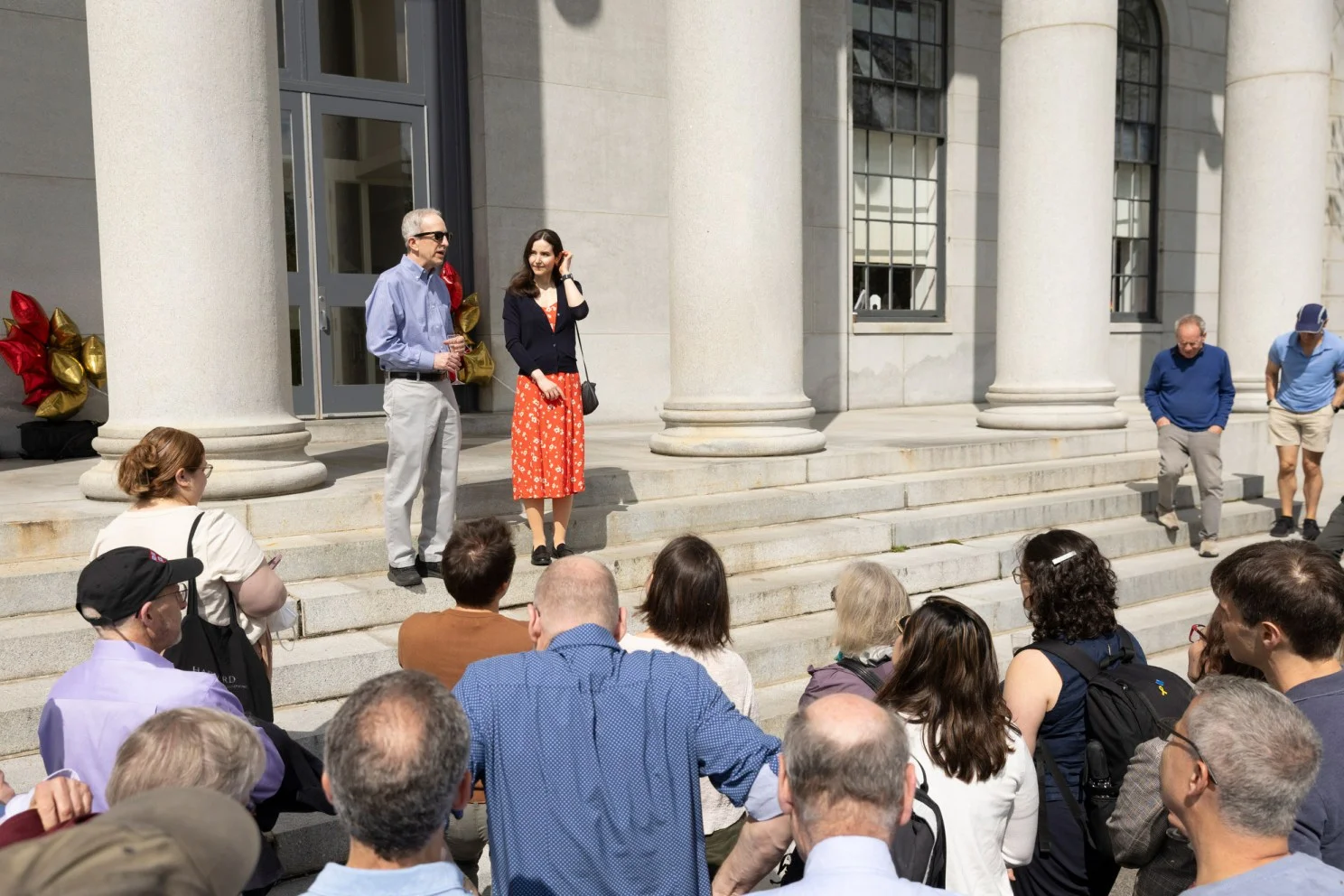
Stantcheva, who serves as the Nathaniel Ropes Professor of Political Economy, expressed her gratitude during a celebration with colleagues and students. “I’m incredibly honored, truly humbled, and very grateful for this award,” she shared. This acknowledgment from her peers signifies not only personal achievement but also the collective recognition of her impactful scholarship within an educational environment steeped in rigorous economic inquiry. It's the kind of accolade that can inspire younger economists and reaffirm the importance of dedication and intellectual rigor.
A New Perspective on Tax Policy
The association highlighted Stantcheva's innovative work in public finance, specifically her exploration of tax policy and its effects on economic behavior. “The tax system is something so powerful that can essentially make or break an economy,” she noted. “It can either encourage things like innovation — if it’s properly designed — or really discourage economic activity.” This insight gets to the heart of a longstanding debate among economists: how tax structures interact with human behavior. Tax incentives have the potential to shape not just corporate decisions but everyday actions, emphasizing the need for thoughtful policy design.
In her influential 2022 research paper, “Taxation and Innovation in the 20th Century,” Stantcheva and her colleagues discovered that innovation responds significantly to changes in tax policy. Their findings indicated that while higher taxes may deter the quantity of innovation, they do not fundamentally diminish the quality of inventions. It's a nuanced standpoint that could reshape how policymakers think about taxation’s role in encouraging growth and technological advancement. If you’re working in this space, you know this kind of analysis can inform everything from economic models to legislative frameworks.
Acknowledgment from Peers
Hopi Hoekstra, Edgerley Family Dean of the Faculty of Arts and Sciences, praised Stantcheva's invaluable contributions: “Stefanie’s important work makes her so deserving of this award. It’s wonderful to celebrate her alongside her colleagues, including several past winners, which speaks to the continued strength of this department.” Statements like these help to position Stantcheva within a lineage of influential economists who have emerged from Harvard, reinforcing the university’s reputation as a breeding ground for impactful economic thought.
Elie Tamer, chair of the Economics Department, remarked on the recognition as well, stating, “We’ve been extremely lucky this year, but not surprised at all that Stefanie got it. She has done stellar work and we’re very proud. It’s a happy day for Harvard and Harvard economics in particular.” This commendation from authoritative figures within the institution underscores the communal pride associated with her achievements and speaks to the ecosystem of mentorship and support that defines academia. (And this is the part most people overlook: the network of collaboration that often amplifies individual success.)
Future Directions and Ongoing Research
Stantcheva, who founded the Social Economics Lab in 2018, aims to further explore critical issues related to trade, immigration, climate change, and social mobility. “I am excited to continue the work at the Social Economics Lab to better understand how people think about economic issues and policies,” she stated. The lab serves as a hub for interdisciplinary research, pooling insights from economics, psychology, and sociology to address efficient market solutions and social equity. This melding of disciplines is not just progressive; it reflects a growing understanding that economic phenomena often don't exist in a vacuum.
Currently, she is investigating groundbreaking topics such as the relationship between emotions and policy, alongside significant concepts like zero-sum thinking. The inquiry into emotional drivers in economics could offer profound implications for how policies are formulated and received by the public. By addressing how emotional responses influence economic decisions, Stantcheva's work is poised to challenge traditional economic models that often ignore human psychology. This area of research is vital; if policymakers don't understand the emotional context of economic behavior, they're likely to miss the mark when advocating for change.
Implications and Future Outlook
Stantcheva's rise and her research suggest a significant shift in how we approach economic policies, particularly in a world where economic challenges are increasingly intertwined with social issues. The implications of her work on tax policy, for instance, may provide a framework for how governments can design systems that maximize innovation while still addressing revenue needs. You can expect a ripple effect, whereby her findings will likely inform not just academic literature but also practical economic policy, steering decisions in both the public and private sectors.
As her research evolves, it may also contribute to a broader understanding of how policies can be crafted to navigate the turbulent waters of modern economics. This approach could prove essential as nations grapple with issues like inequality and environmental sustainability. The lens she applies to her research could very well shape the next generation of economic debate, making her an economist to watch in the coming years.


Discussion
Sign in to join the discussion.