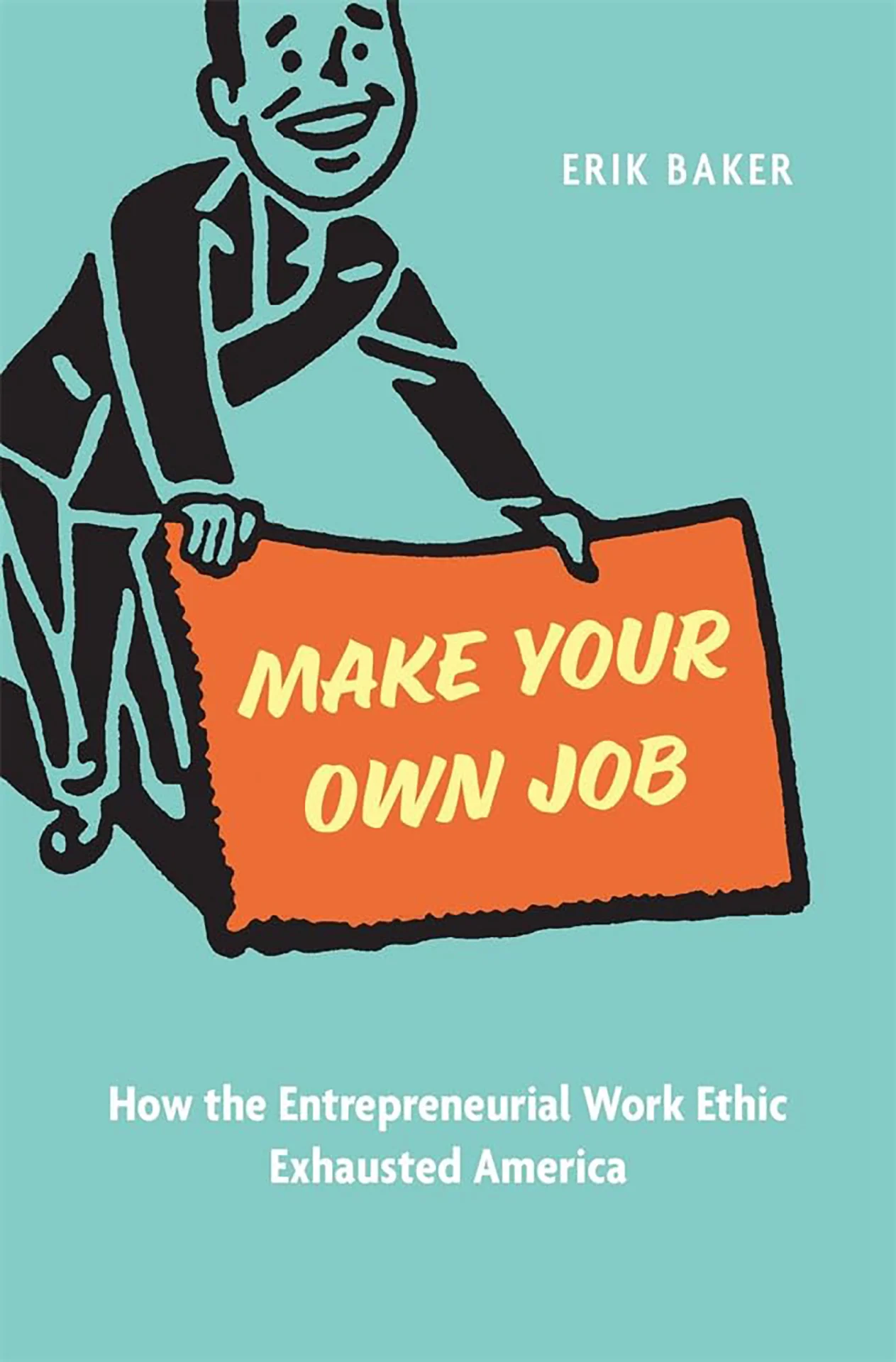
Erik Baker's "Make Your Own Job" explores the demanding culture of entrepreneurialism in America and its impact on individual well-being and job fulfillment.

Entrepreneurialism has become a defining aspect of the American work ethic, expanding beyond traditional business founders to include a diverse array of individuals such as managers, ride-share drivers, and freelancers. This trend highlights not only a shift in how Americans view work but also the psychological toll it can take. In "Make Your Own Job," Erik Baker, a lecturer in the history of science, examines this cultural phenomenon and its implications on personal identity and job satisfaction.
Baker’s interest in entrepreneurialism sparked as he observed friends graduating from college and landing well-paying corporate jobs, only to find themselves deeply unhappy. One friend captured this sentiment by likening her experience to a character from the film "Annihilation," signifying a profound sense of dislocation in the workplace. Baker's exploration reveals how intertwined work has become with our perceptions of self-worth and social status.
Historical Roots of the Entrepreneurial Spirit
The rise of entrepreneurialism can be traced back to the late 19th century, coinciding with the decline of traditional manufacturing jobs due to technological advancements. Baker notes that the shift from a robust manufacturing sector to one characterized by “structural unemployment” led many to seek alternatives that would allow them to forge their own paths. This transition saw a reevaluation of the American work ethic, favoring entrepreneurship as a means of personal transcendence over sheer industriousness.
By the early 1900s, as unemployment rates rose, there emerged a cultural ethos that prized initiative and self-reliance. Influential thinkers and writers began encouraging individuals to “make your own job,” promoting a narrative where personal skills and ambition could transform into viable occupations. The ethos spread beyond just traditional entrepreneurs to managers who were urged to inspire rather than merely oversee their workers.
Economic and Psychological Implications
The patterns Baker identifies highlight not only an economic strategy but also a deep-seated psychological imperative. During economic downturns, such as the Great Depression, the entrepreneurial spirit evolved into a legitimate means of survival for many, leading to the proliferation of freelance work and self-employment as viable alternatives to unemployment. Women, particularly those facing age discrimination, found empowerment in this individualistic approach, signaling a shift in both opportunities and societal expectations.
Figures like Napoleon Hill, whose classic "Think and Grow Rich" continues to resonate even today, encapsulated this messaging by urging readers to view work not merely as a job but as a calling. The crisis of the time seemed to demand a new way of thinking about labor and success, framing personal branding and self-promotion as essential skills.
Shifting Definitions and Cultural Reflections
By the mid-20th century, the definition of what it meant to be an entrepreneur had broadened significantly. Influenced by thinkers like Abraham Maslow, who emphasized the value of entrepreneurial minds in restoring societal balance, there was a compelling argument made for viewing everyone as potential entrepreneurs—whether they were leading corporations or seeking new education paths in the wake of job losses.
Yet, as Baker points out, this pervasive mentality also contributed to societal blame for economic stagnation in urban centers, suggesting that a lack of entrepreneurial spirit was to blame for the struggles faced by cities like Detroit. Baker argues that this narrative unfairly equates diverse economic experiences under a single umbrella of entrepreneurship, missing the nuances of those who struggle to find work.
Modern Impacts of Entrepreneurial Culture
The late 20th century saw a cultural shift where the narrative around work became dominated by the search for meaningful engagement rather than merely job security. Leaders like Steve Jobs emphasized moral obligations to innovate, suggesting that competition transcended economic necessity and was instead tied to a vision for the future. This created an environment where individuals continuously sought enlightenment through their work, often at the expense of their mental well-being.
Today, the glorification of entrepreneurialism persists, despite the anxieties associated with freelance work and job displacement due to technology. Baker paints a compelling picture of a society where personal responsibility for success places excessive pressure on individuals—leading many to feel constantly on edge, worried about potential failure.
In "Make Your Own Job," it's evident why Baker's observations resonate deeply with a generation grappling with the demands of an entrepreneurial mindset. His exploration suggests that the path to self-led success may not always lead to fulfillment, as individuals wrestle with the challenge of meeting personal expectations in a world that increasingly equates self-worth with entrepreneurial success.
Ultimately, Baker's work serves as a cautionary tale about the relentless pursuit of entrepreneurship, one that leaves little space for relaxation or detachment from the pressures we place upon ourselves in the quest for meaningful work.



Discussion
Sign in to join the discussion.