Comedian Ronny Chieng warns graduates at Harvard about the risks of AI, urging them to prioritize creativity and critical thinking in their careers.
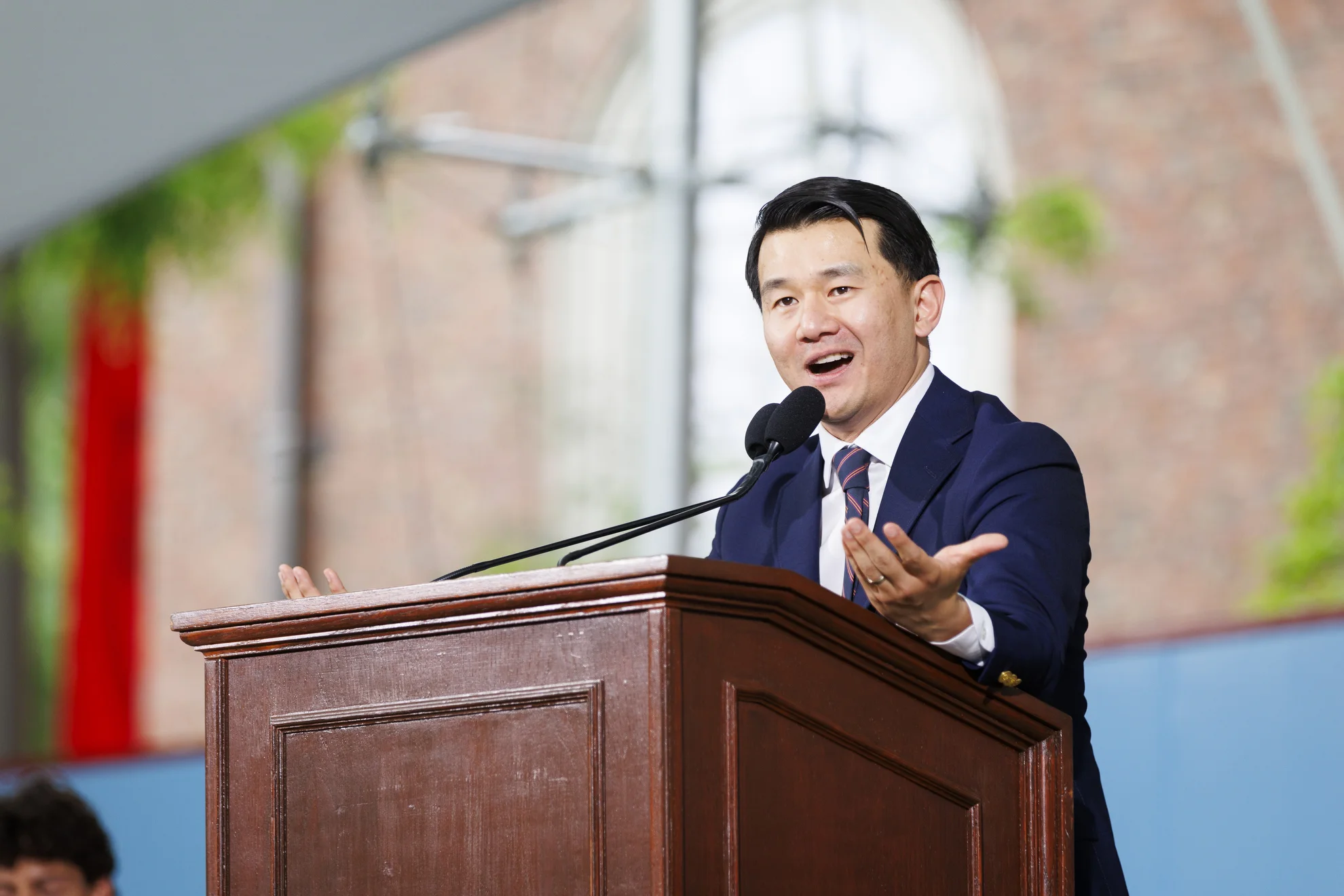
During Harvard's Class Day, Emmy Award-winning comedian Ronny Chieng delivered a thought-provoking message centered on the relationship between creativity and artificial intelligence. As he spoke to the graduates of the Class of 2026, Chieng urged a skeptical approach toward AI, particularly its application in areas beyond creative endeavors.
Caution in the Age of AI
Chieng's remarks came infused with humor yet expressed clear caution about the implications of heavy AI usage. In a landscape increasingly dominated by advances in artificial intelligence, skepticism is warranted. He referenced a 2025 MIT study titled “Your Brain on ChatGPT” that discusses the detrimental effects of relying too much on language models, a phenomenon he termed "cognitive debt." This term reflects a concern that as we lean more on AI for tasks ranging from writing to decision-making, we may inadvertently deplete our cognitive resources and critical thinking skills. With a mix of levity and seriousness, he stated, “I’m here to tell you the mission of your generation is to destroy AI.” Such a call to action resonates in an era where technology is not just a tool but a potential substitute for human thought. He elaborated, suggesting that while AI can have beneficial applications in fields like medicine and physics, his primary concern lies with its misuse and the consequent erosion of essential cognitive abilities.
The Absurdity of AI Dependency
Chieng's comedic style shone through when he described mundane tasks like reading and responding to emails. He quipped, “You know who else can do that? Me,” provoking laughter from the audience. This statement underscores a deeper issue: by delegating even basic communication tasks to machines, we risk undermining our engagement in personal and professional interactions. Ironically, Chieng's jest illustrates a serious concern about how automation can lead to a detachment from responsibilities we should retain. This isn't just about email. It's about the very essence of meaningful communication, which will always require a human touch. If you're working in this space, you have to recognize the potential pitfalls of this convenience. It’s easy to get comfortable handing off tasks, but at what cost to our intellectual agency?

Photo by Grace DuVal
The Value of Creativity
Chieng, who grew up in Singapore before spending part of his childhood in Manchester, New Hampshire, passionately reminded the graduates about the weight of creativity in life and work. He asserted, “Creating is the fun part.” Here’s the thing: in a world where outputs are increasingly automated, the pursuit of creativity is what truly enriches our experiences. That’s especially evident in fields like comedy, where the challenge of crafting a joke requires genuine thought, effort, and artistic sensibility. This isn't just a minor detail. It's the heartbeat of what makes work enjoyable and fulfilling.
Furthermore, Chieng articulated that the real "battle" for this generation won’t be between humans and AI, but rather between those who possess depth of knowledge and true creativity and those who may rely on superficial understanding and imitation. “Your generation's upcoming battle won’t be on the level of humans against AI,” he stated, providing a stark reminder of the importance of enhancing one's skill set rather than succumbing to the convenience of automation. Mediocrity, according to him, threatens to supplant substantial knowledge, a trend that could have far-reaching implications for innovation and personal fulfillment.
Reflection and Tribute
Class Day serves as an important milestone for students to celebrate academic achievements while simultaneously reflecting on their time at Harvard. Chieng's insightful call to arms resonated strongly among the attendees. Introduced by Nicholas S. Kalkanis ’26, the event recognized the power of humor to help navigate life’s complexities. Kalkanis emphasized, “Comedy can challenge us to be curious and honest about what we see,” which showcases humor's pivotal role in critical examination and social critique.
The day also included heartfelt tributes, particularly one to classmate Lakota Tolloak, who passed away in January 2025. Such moments highlight the profound bonds formed during their shared experiences at Harvard, adding emotional weight to the festivities. This mixture of celebration and remembrance underscores how deeply interconnected students become during their time at university.
The Offline World
In his concluding remarks, Chieng implored the graduates to ensure that their "offline world is better than their online world," a warning against the superficial chase for profit that often characterizes modern careers. Passion, he positioned as the guiding force for career fulfillment, noting, “Follow your passion. For me, that was stand-up comedy.” When you root your work in something you genuinely love, the pursuit becomes more than just a job—it becomes a source of joy and connection. That joy can spread to others, fostering community and inspiring creativity, values that are increasingly important in today’s technology-centric society.
Future Implications
As we look ahead, the implications of Chieng's message extend far beyond the walls of Harvard. The intersection of AI and creativity raises pressing questions about the future. Will the next generation prioritize depth and authenticity in their pursuits, or will they settle for easier, more automated solutions? If the trend of outsourcing intellectual tasks continues, we may find ourselves in a culture where genuine creativity is devalued. The fight against cognitive debt is not just about rejecting AI; it’s about cultivating a mindset that values personal engagement, critical thinking, and the rich tapestry of human experience that technology can't replicate. This is where the real challenge lies, and it’s one that society must confront head-on.


Discussion
Sign in to join the discussion.