Retired Lt. Gen. Richard Clark honors Sherrod Skinner's legacy, emphasizing leadership values during Harvard's ROTC commissioning ceremony.
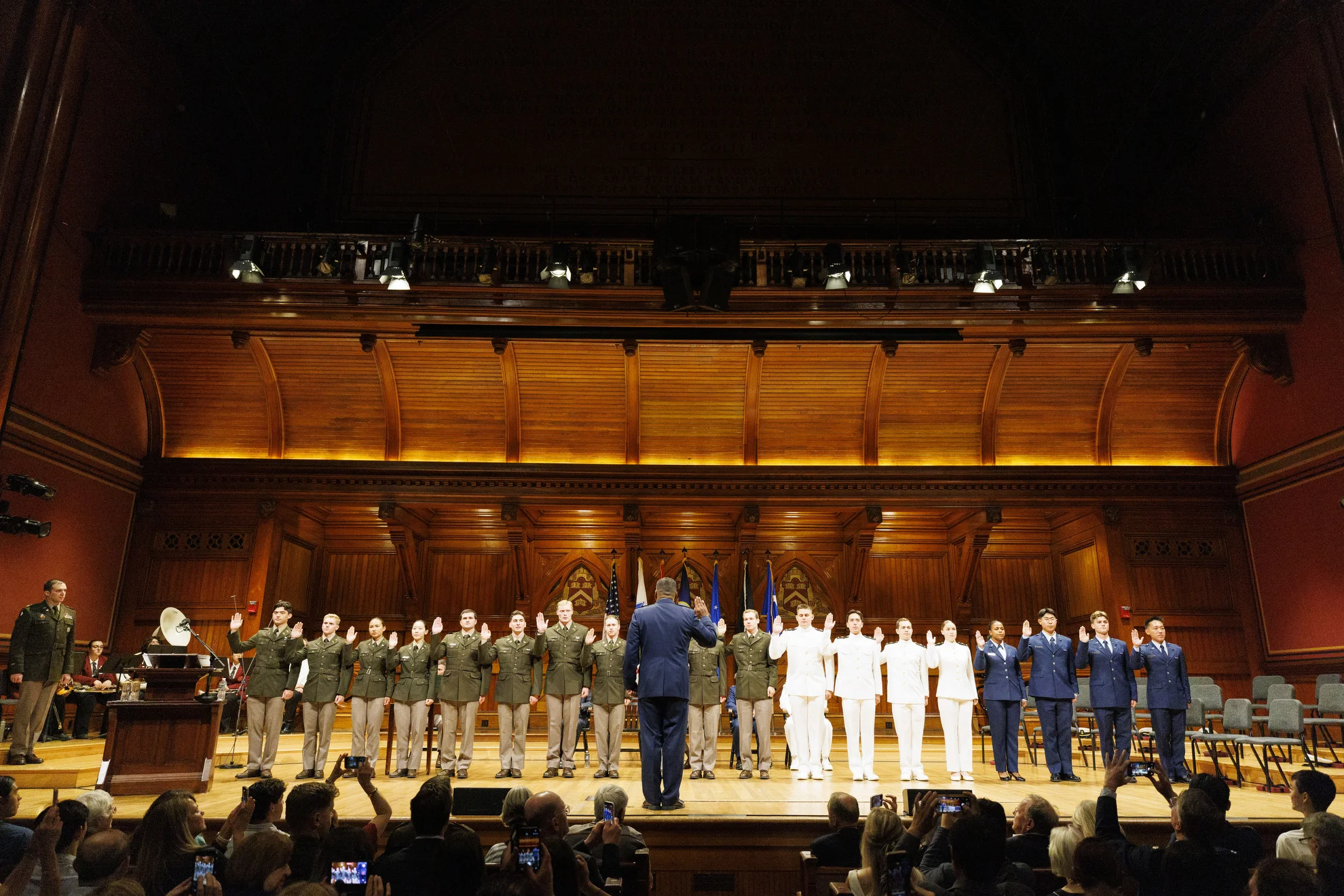
At a recent Joint Commissioning Ceremony at Harvard, the heroism of Sherrod Skinner was spotlighted as an example of exemplary leadership values. Skinner, a second lieutenant and Harvard alumnus, made the ultimate sacrifice in October 1952 during the Korean War, when he selflessly rolled onto a live grenade to protect his fellow Marines. His actions earned him the Medal of Honor and serve as a profound lesson on integrity, humility, and excellence for future military leaders.
Retired Air Force Lt. Gen. Richard Clark, who has over 400 combat flight hours and is a former head of the Air Force Academy, took to the podium to elevate Skinner's legacy while addressing 19 graduating seniors newly commissioned as second lieutenants and ensigns across various branches of the military, including the Army, Navy, Air Force, and Space Force. Clark articulated that Skinner’s ability to maintain composure, even after sustaining injuries, allowed his unit to fend off attackers despite dwindling resources.
As ammunition ran low, Skinner concocted a tactical ruse: his men feigned death, a strategy that initially preserved their position until an enemy soldier tossed in a grenade. It landed dangerously close, prompting Skinner’s fateful decision. “He took that explosion himself to save his men,” Clark noted, emphasizing Skinner’s commitment to a cause greater than himself.
During the ceremony in Sanders Theatre, Clark outlined three essential pillars of leadership—integrity, humility, and excellence. He elaborated that integrity involves aligning one's actions with moral principles, while humility means prioritizing the needs of others over self-interest. Finally, excellence pertains not to chasing an unreachable ideal but to striving for continuous improvement.
Clark highlighted Skinner as a paragon of these values, recalling how quickly Skinner adapted and excelled in his role, achieving remarkable feats in a short span of time. “Integrity, humility, excellence—that’s what he embodied,” Clark asserted, pointing out that this legacy is particularly relevant for the new officers starting their military careers.
Harvard President Alan Garber, who provided introductory remarks, also linked past sacrifices to the present-day military ethos. He recounted the story of Edward Hutchinson Revere, a Harvard graduate and Civil War hero, noting the deep-rooted connections between Harvard's academic legacy and military service. “In the year of the United States Semiquincentennial, we are reminded of the role that this place of learning and the people it has educated have played in making America,” Garber stated, reflecting on how civic duty shapes the nation.
The ceremony unfolded within the historic walls of Memorial Hall, where inscriptions honor 136 Harvard alumni who perished fighting for the Union during the Civil War. The message was clear: the new officers, now embarking on varied military paths—from infantry to medical corps—stand on the shoulders of those who went before them, a tradition reflecting nearly 50,000 alumni with deep military ties and an impressive record of 18 Medal of Honor recipients, one of the highest accolades for valor in U.S. military service.
The newly minted officers face diverse careers in their respective branches. These include roles in military intelligence, piloting aircraft, operating submarines, and excelling in cyber warfare—all vital to contemporary military operations. While most transition into active duty immediately, a few will postpone service for further education, including law or medical school.
Amid the formalities of the commissioning, which included the oath-taking and the presentation of insignia, the event also featured a symbolic first salute from an enlisted service member or a close acquaintance. This custom, in which the new officers give a silver dollar in gratitude for their first salute, underscores the camaraderie and mutual respect foundational to military service.
The commissioning roster included numerous promising individuals, such as second lieutenants in the Army and Air Force, supplemented by ensigns in the Navy and the Space Force. Graduates like Quin Daly, Zoe Clark, and Sydney Slazak, among others, represent not just their personal achievements but a continuum of service linking them to a storied military past.
Recognizing excellence and sacrifice through stories like that of Lt. Skinner reinforces the core values of leadership within military traditions. As these new officers step into their roles, the lessons of honor, dedication, and the importance of good leadership will certainly shape their actions in service of their country and communities.

Discussion
Sign in to join the discussion.